The Nigerian Senate has rescinded the controversial Senate ranking rule amendment that restricted first-term senators from contesting for key leadership positions in the 11th National Assembly. The decision effectively reopens the race for Senate President and Deputy Senate President ahead of the 2027 political transition.
The Senate had earlier amended its Standing Orders during a closed-door executive session, introducing stricter eligibility conditions for senators seeking presiding and principal offices in the next National Assembly. Under the amendment, only returning senators from the current 10th Senate would have been eligible to contest for top leadership positions.
The controversial amendment generated criticism from lawmakers and political observers who argued that the Senate ranking rule conflicted with constitutional provisions and parliamentary conventions governing legislative operations in Nigeria. Concerns also emerged over its potential effect on political competition within the National Assembly ahead of 2027.
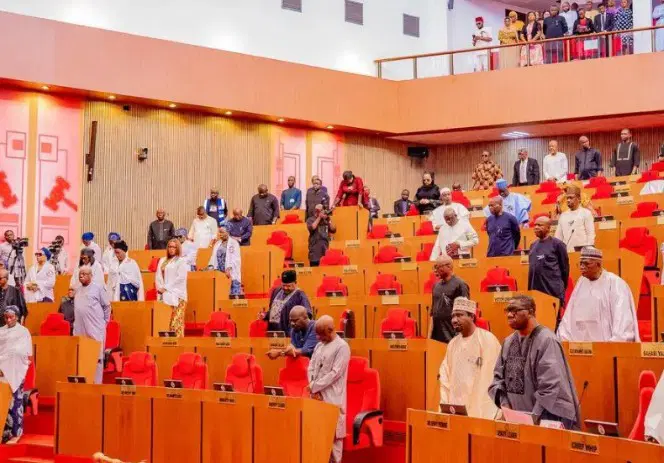
The Senate reversed the amendment through a motion sponsored by Senate Leader Opeyemi Bamidele and presided over by Deputy Senate President Jibrin Barau during plenary. The motion, titled “Recession and Re-Committal of Order 2(2) and Order 3(1) of the Senate Standing Orders, 2023, as amended,” was adopted through a voice vote.
Presenting the motion, Bamidele said the earlier amendment required reconsideration after further legislative and constitutional review. He stated: “Certain provisions introduced under Order 2(2) and Order 3(1) may give rise to constitutional inconsistencies and unintended tensions with the Constitution.”
The reversal means the Senate ranking rule restricting eligibility to returning lawmakers has now been withdrawn, allowing all elected senators in the 11th Assembly to contest for leadership offices regardless of tenure status.
Before the reversal, the amended rules had limited eligibility for Senate President and Deputy Senate President to senators returning from the current Assembly after re-election in 2027. The rules also imposed stricter conditions for principal offices such as Senate Leader, Chief Whip, and Minority Leader.
Senator Adams Oshiomhole had openly criticised the initial amendment process, insisting broader consultations were necessary on issues affecting legislative leadership and institutional procedures.
The reversal of the Senate ranking rule is expected to widen political competition ahead of the inauguration of the 11th National Assembly in 2027. The development also signals a shift toward a more open leadership process within the Senate after concerns that the earlier amendment could limit participation and concentrate influence among a select group of lawmakers.
Political observers note that the decision could encourage more former governors, ranking politicians, and first-term lawmakers to pursue leadership ambitions in the Senate after the next general election. Reports indicate that several serving and former governors are already considering senatorial contests ahead of 2027.