
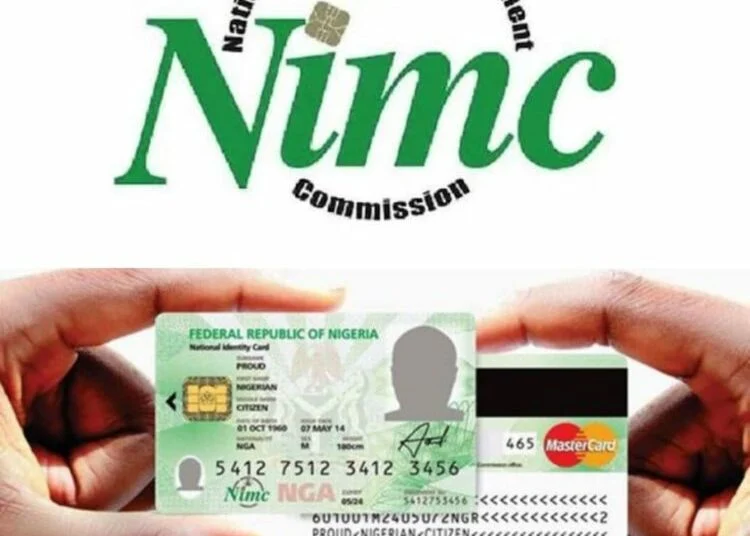
President Bola Tinubu has directed the National Identity Management Commission (NIMC) to complete national identity enrolment for every Nigerian before the end of 2026 as part of efforts to strengthen governance, improve public service delivery and establish a comprehensive national identity database.
The directive was disclosed by NIMC Director-General and Chief Executive Officer, Abisoye Coker-Odusote, during an interview on Channels Television’s Sunday Politics. According to her, the President has given the commission a clear deadline to ensure that all Nigerians are registered in the country’s identity database before the year ends.
Coker-Odusote explained that NIMC is accelerating national identity enrolment through collaborations under the World Bank-supported Identification for Development (ID4D) project.
She said the commission has engaged accredited private-sector partners within the digital identity ecosystem to carry out enrolment activities across communities nationwide, helping to increase registration capacity while creating employment opportunities. The NIMC boss noted that the initiative is designed to take identity registration closer to communities and make the process more accessible for citizens.
According to the commission, the National Identification Number (NIN) remains Nigeria’s unique identity credential, ensuring that every individual is registered only once. Coker-Odusote explained that the NIN system is built around a single identity for every Nigerian, eliminating the possibility of maintaining multiple official identities. She added that once an individual has been successfully enrolled, the identity remains unique throughout the person’s lifetime.
Addressing concerns about multiple registrations, the NIMC chief said recent improvements to the commission’s biometric verification system have strengthened the integrity of the database.
She explained that while the previous platform only detected duplicate records after submission, the upgraded system uses fingerprint and facial recognition technology to identify duplicate attempts and invalidate them automatically. According to her, biometric verification makes it extremely difficult for any individual to obtain more than one identity within the national database.
She also disclosed that public and private institutions are expected to validate identities directly through NIMC’s Application Programming Interface (API) instead of maintaining separate biometric databases. Telecommunications companies already use the platform to verify customers applying for SIM cards by matching facial biometrics with the NIMC database in real time.
Coker-Odusote said completing national identity enrolment would also enable government authorities to determine Nigeria’s actual population.
She noted that current population estimates vary between 200 million and 250 million people, making accurate planning more difficult. According to her, a reliable identity database is essential for effective governance, resource allocation and the delivery of public services because government agencies need accurate population figures to plan efficiently.
The nationwide registration drive follows President Tinubu’s signing of the National Identity Management Commission (NIMC) Act 2026 into law on June 26. The legislation repealed the 2007 Act and reinforces the country’s “One Person, One Identity” policy.
Under the new law, the National Identification Number becomes Nigeria’s foundational identity credential for accessing key government and essential private-sector services, including banking, passport applications, tax administration, pensions, land transactions and consumer credit. NIMC says the expanded identity database is expected to strengthen security, improve service delivery and support more effective national planning once the nationwide enrolment exercise is completed.