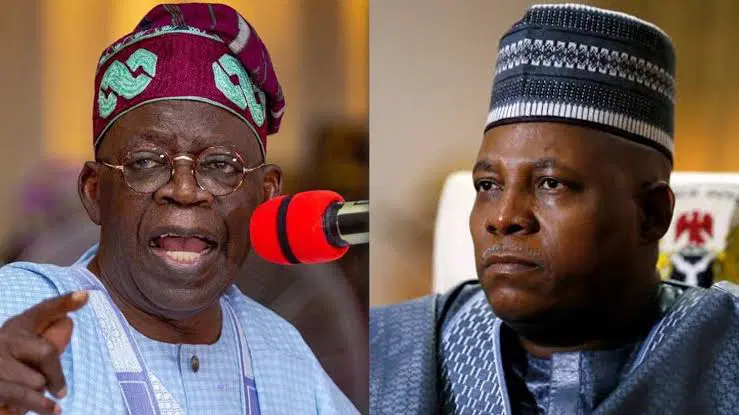
The decision by the All Progressives Congress (APC) to retain its APC Muslim-Muslim ticket for the 2027 presidential election has continued to generate contrasting reactions from political leaders, socio-cultural organisations and stakeholders, with opinions split between prioritising competence and ensuring broader political inclusion.
The renewed debate follows widespread expectations that President Bola Tinubu and Vice President Kashim Shettima will once again contest on the APC platform in the next general election.
The National Organising Secretary of Afenifere, Abagun Kole Omololu, said public attention should shift from religious identity to leadership performance.
According to him, Afenifere remains committed to justice, constitutional democracy, good governance and the welfare of Nigerians regardless of religious affiliation. He argued that citizens are more concerned about insecurity, economic hardship, healthcare, education and accountable leadership than the faith of political office holders.
Omololu cited past examples, including the administrations of Lateef Jakande and Rafiu Jafojo in Lagos, the 1993 MKO Abiola-Babagana Kingibe ticket, and Chief Obafemi Awolowo’s choice of Philip Umeadi as running mate, saying Nigerians have historically rewarded competence above religion. He maintained that President Tinubu and Vice President Shettima have not demonstrated religious bias in the discharge of their constitutional responsibilities.
Former Speaker of the Ondo State House of Assembly, Rt. Hon. Bakita Bello, said leadership should ultimately be assessed by competence, compassion and service rather than religious composition.
While describing himself as a humanist, Bello argued that neither the previous Buhari-Osinbajo Muslim-Christian administration nor the current Muslim-Muslim arrangement has solved Nigeria’s major challenges, including insecurity, corruption and economic hardship. He questioned whether ordinary Nigerians had experienced meaningful improvements under successive APC administrations, urging voters to evaluate political parties based on measurable results instead of religious considerations.
Labour Party National Vice Chairman (South-West), Comrade Abayomi Arabambi, dismissed criticisms of the APC Muslim-Muslim ticket, insisting that competence and political realities should outweigh religious sentiments. According to him, Northern Nigeria’s demographic composition influenced the APC’s decision to retain Shettima as running mate. Arabambi argued that replacing a northern Muslim with a northern Christian would not necessarily improve the party’s electoral prospects.
He also rejected claims that the Muslim-Muslim ticket contributed to insecurity or discrimination, maintaining that criminal violence affects Nigerians regardless of faith. The Labour Party chieftain urged Nigerians to judge the Tinubu administration by its economic reforms, unified foreign exchange policy and improvements in fuel supply rather than religious identity.
Coordinator of the Yoruba Progressive Forum, Lateef Olalekan, described the ticket as a political strategy aimed at maintaining continuity rather than promoting religious division. He, however, acknowledged concerns among Christians, particularly over insecurity in Benue, Plateau and parts of the North-Central.
Similarly, Afenifere Secretary-General, Chief Olusola Ebiseni, said religion has traditionally not been a divisive issue in Yorubaland and argued that President Tinubu has not governed along religious lines. Ebiseni added that retaining the existing ticket could help preserve stability within the administration while avoiding fresh political tensions ahead of the election.
Former Ekiti State Commissioner for Information, Lanre Ogunsuyi, argued that much of the renewed controversy is being fuelled by competing interests within the APC rather than genuine concerns about religious balance. According to him, many politicians challenging the arrangement are primarily interested in the vice-presidential position. Ogunsuyi maintained that insecurity, inflation, unemployment and economic recovery should dominate political campaigns instead of religious debates.
President of the Yoruba Council Worldwide, Aare Oladotun Hassan, urged political leaders to approach the issue responsibly and avoid deepening divisions. He said democracy is strengthened when all segments of society feel represented and encouraged leaders to prioritise competence, justice and policies capable of improving citizens’ welfare.
Social Democratic Party presidential candidate, Prince Adewole Adebayo, said religion should never become the primary factor in determining electoral choices.
Recalling the SDP’s Muslim-Muslim ticket of MKO Abiola and Babagana Kingibe in 1993, Adebayo argued that Nigerians accepted the duo because they were assessed beyond religious identity. He insisted that insecurity, poverty, unemployment and poor governance affect Nigerians across religious lines, making justice, honesty, competence and fairness far more important considerations.
Adebayo further argued that Islamic principles themselves emphasise justice and merit above religious affiliation when selecting leaders. He concluded that Nigerians are increasingly interested in accountable leadership capable of addressing the country’s common challenges rather than the religious identities of those seeking political office.