
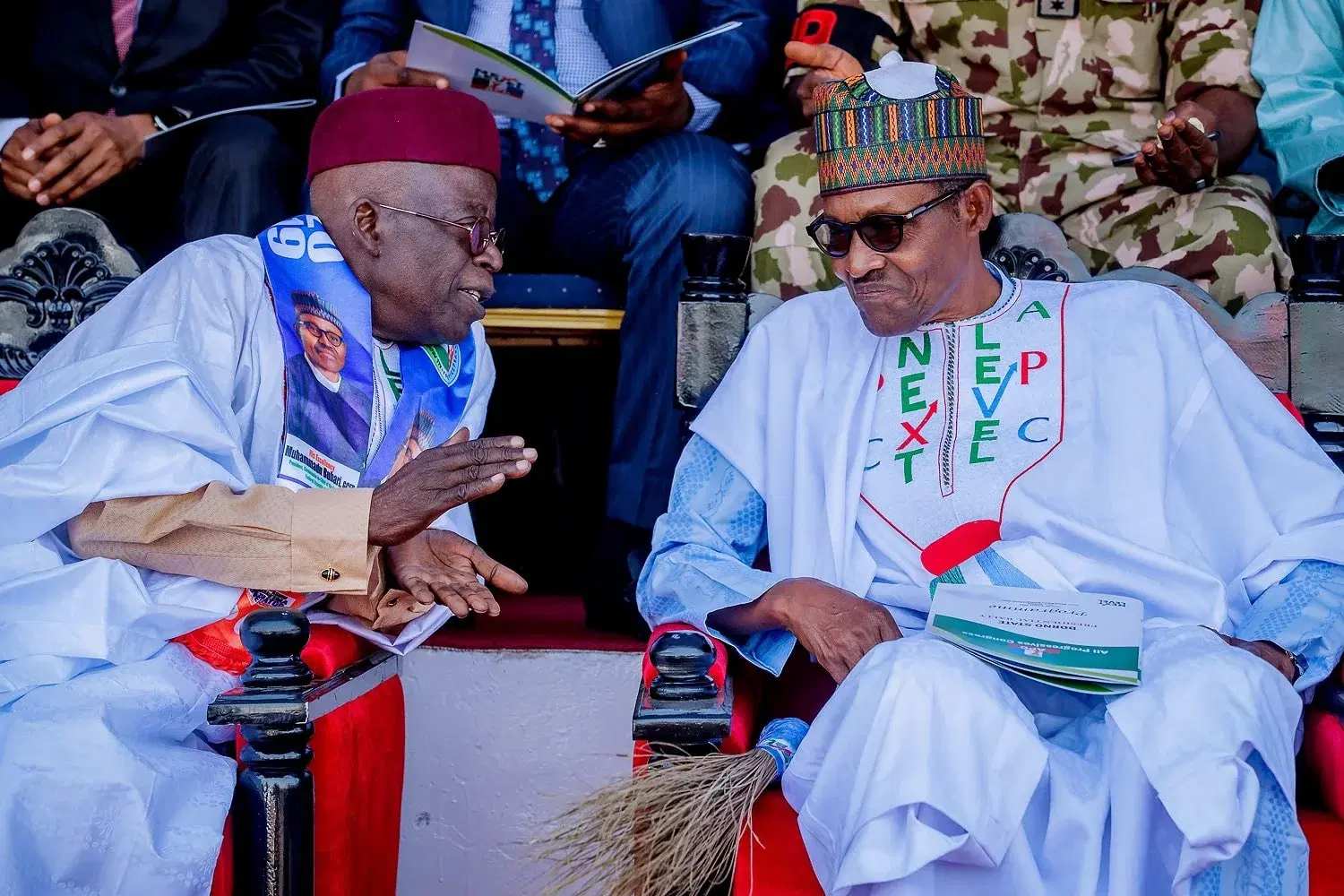
Segun Sowunmi, convener of the political group The Alternative, has faulted the African Democratic Congress (ADC) coalition strategy for the 2027 general election, stating that the successful blueprint for political alliances in Nigeria belongs to the coalition that produced the All-Progressives Congress (APC) under President Bola Tinubu and former President Muhammadu Buhari.
Sowunmi expressed his views in an interview on TVC’s Breakfast programme on Thursday, January 22, 2026.
Sowunmi argued that the APC’s formation was underpinned by years of ideological stability and sustained groundwork, qualities he said are absent in the current coalition efforts around the ADC.
He emphasised that the political alliance which brought together multiple parties into the APC was the result of long-standing political identities and hard work that cannot be easily replicated.
“First of all, you must concede that the playbook of a coalition political party belongs to Asiwaju Bola Ahmed Tinubu and Muhammadu Buhari in that bloc,” Sowunmi said. “They brought stability of ideological situations to the table.”
He explained that Tinubu and Buhari were able to forge their alliance because they had well-established political identities and shared a history of collaboration that enabled them to unite their supporters effectively.
Sowunmi noted that Tinubu was historically identified with the Alliance for Democracy (AD) and Action Congress (AC) political traditions, while Buhari had his roots in the All Nigeria Peoples Party (ANPP).
Sowunmi criticised current coalition advocates within the ADC, accusing them of attempting to emulate the APC model without understanding the foundational work required. He described this approach as ineffective, saying that those pushing for coalition now “do not understand that you have to rewrite the book.”
“You can’t run on the playbook of Bola Tinubu and Buhari, which they invented, and think you’re going to beat them at a game they invented,” he added, stressing that coalition-building requires intense grassroots engagement and political sacrifice.
Sowunmi further argued that both Tinubu and Buhari did not achieve their alliance successes overnight.
He recalled that they were unable to form a coalition as early as 2011 and only succeeded later after abandoning their former parties and persuading other political actors to join a new platform, which eventually became the APC.
According to him, many of the current coalition advocates are attempting to shortcut the process by seeking to take control of existing party structures without due regard for constitutional processes or grassroots mobilisation.
He used the example of the internal leadership crisis within the ADC, which he attributed in part to efforts to gain control of the party from the top down rather than building consensus at the base.
Sowunmi’s comments contribute to ongoing debates about the viability and coherence of opposition strategies leading up to the 2027 elections, particularly the approach adopted by politicians aligning with the ADC as a coalition platform against the ruling APC.