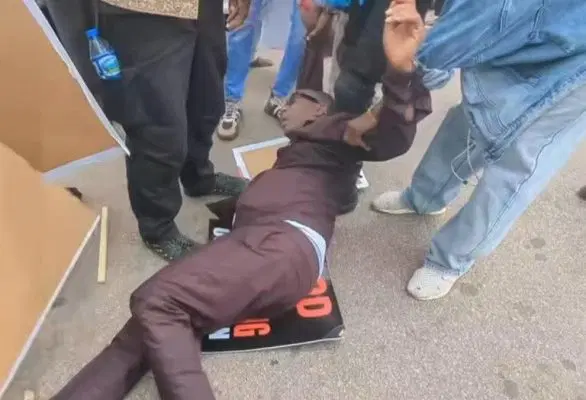
A Democracy Day protest in Abuja turned chaotic on Friday after security operatives fired tear gas at demonstrators gathered to mark the 33rd anniversary of the June 12, 1993 presidential election. The protest, led by activist and former presidential candidate Omoyele Sowore alongside members of the Take It Back Movement and other civil society groups, focused on rising insecurity, economic hardship, kidnappings and governance concerns.
Nigeria’s Democracy Day commemorates the June 12, 1993 presidential election, widely regarded as one of the freest and fairest polls in the country’s history despite its eventual annulment by the military government. As citizens marked the anniversary, activists used the occasion to express dissatisfaction with the country’s economic conditions and security challenges, arguing that many Nigerians were yet to experience the full benefits of democratic governance.
Ahead of the demonstrations, security agencies deployed heavily armed personnel across strategic locations in Abuja, including the Three Arms Zone, Presidential Villa, National Assembly and Supreme Court. Roadblocks and traffic diversions were also put in place around key government districts.
Despite the restrictions, participants in the Democracy Day protest assembled at various locations, including Wuse, Unity Fountain and the Federal Secretariat.
Carrying placards and chanting solidarity songs, demonstrators demanded stronger government action to address inflation, unemployment, insecurity and the growing kidnapping crisis affecting communities across Nigeria. Addressing supporters before the march, Sowore said the protest was aimed at drawing attention to what he described as declining democratic values and worsening living conditions.
Tensions later escalated when police dispersed demonstrators with tear gas around the Federal Secretariat. Amid the confusion, Sowore reportedly collapsed after inhaling tear gas and was assisted by supporters. Protesters repeatedly called for the rescue of abducted citizens, particularly schoolchildren and other victims currently held by kidnappers across different parts of the country.
Separate demonstrations were also organised by social media activist Martins Vincent Otse, popularly known as VeryDarkMan, and members of the Ratel Movement.In another unusual development, members of a group identified as the Babalawo Association staged an independent march toward the Presidential Villa.
The Democracy Day protest resulted in increased security presence across major roads and public facilities in the Federal Capital Territory, causing traffic disruptions in several areas. As of the time of filing this report, authorities had not issued an official statement regarding the use of tear gas against demonstrators.
In Lagos, human rights lawyer Femi Falana (SAN), Afrobeats artiste Folarin Falana, popularly known as Falz, and several civil society organisations organised a separate demonstration at Ikeja Under Bridge. Participants carried placards demanding improved security, an end to kidnappings, hunger and economic hardship.
Falana called for the immediate release of abducted pupils and teachers in Oyo State, describing their continued captivity as a matter of urgent national concern. He also criticised what he described as widespread injustice, poverty and insecurity affecting many Nigerians.
Falz echoed similar concerns, warning that growing cases of kidnappings and violent crimes were increasing public anxiety and frustration. Human rights activist Olumide Ogunsanwo, popularly known as Seaking, also urged the government to intensify efforts against criminal groups and improve security nationwide.
The Democracy Day demonstrations in Abuja and Lagos reflected growing public concerns about insecurity, economic hardship and governance challenges facing the country. While security agencies maintained order throughout the protests, organisers insisted that advocacy efforts would continue until stronger action is taken to address the issues raised by citizens across the country.