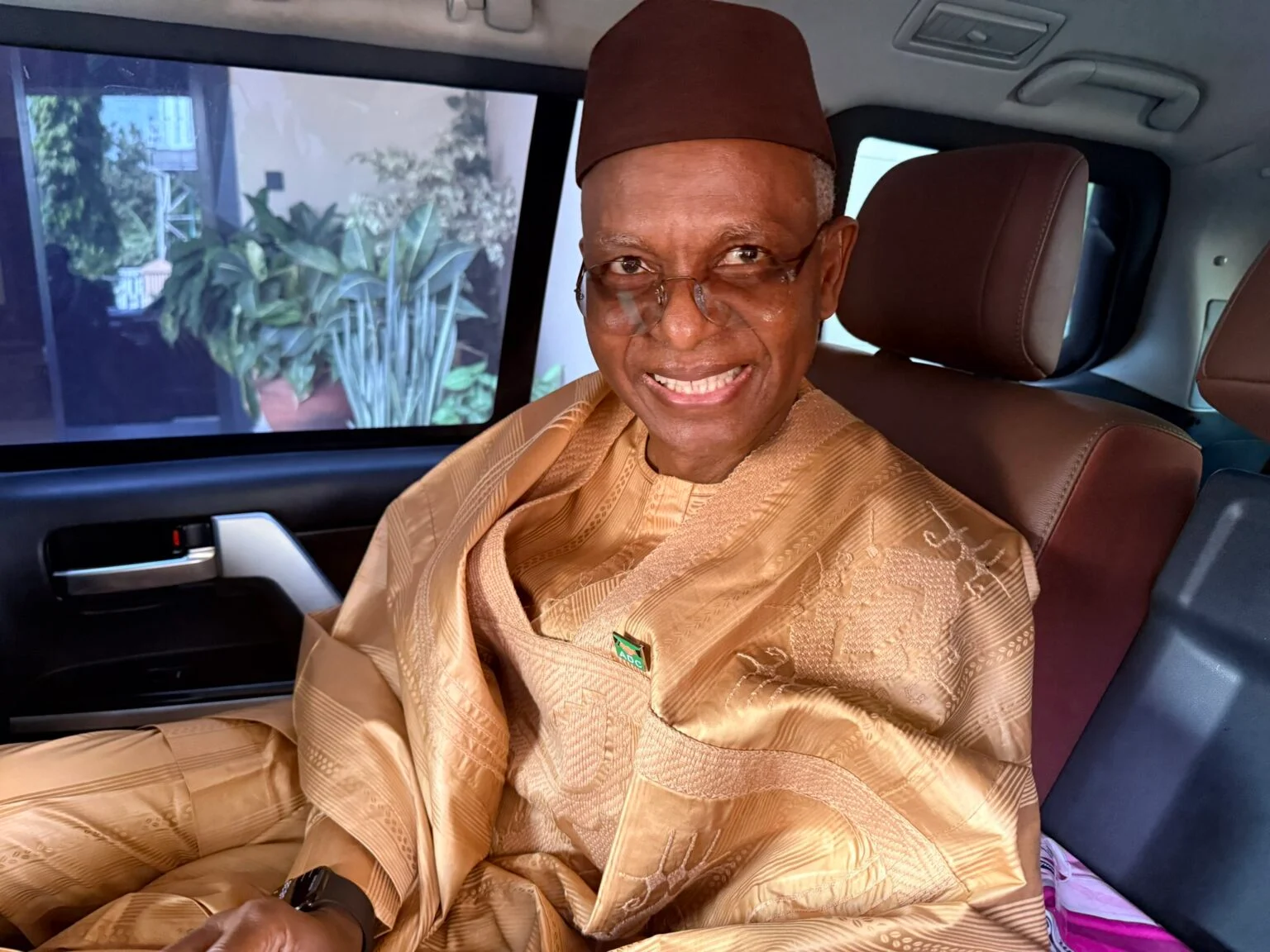
Former Kaduna State Governor Nasir El‑Rufai spent a second night in the custody of the Economic and Financial Crimes Commission (EFCC) on Tuesday as his lawyer continued to push for his release on bail while the anti‑graft agency considers seeking a remand order to allow further questioning, legal and EFCC sources said.
El‑Rufai arrived at the EFCC headquarters in Abuja on Monday morning to respond to an invitation from the commission in connection with an alleged ₦432 billion probe linked to his tenure as governor of Kaduna State from 2015 to 2023.
The probe relates to a 2024 report from an ad hoc committee of the Kaduna State House of Assembly, which alleged financial improprieties, including the use of loans and questions about contract awards and public funds during El‑Rufai’s administration.
An EFCC official who requested anonymity said investigators may seek a remand order for El‑Rufai after the statutory 48‑hour detention period expires in order to continue questioning him about matters arising from the probe.
El‑Rufai’s lawyer, A.U. Mustapha (SAN), confirmed that the former governor remained in the commission’s custody and said he had cooperated fully with investigators. Mustapha said El‑Rufai had honoured the EFCC invitation voluntarily and described him as a responsible citizen who would not flee if granted bail.
Mustapha declined to provide details about the specific allegations, saying only that such information could be answered by the EFCC. The lawyer said discussions with investigators were confidential and not meant for public disclosure.
Mustapha said: “As we speak, he is still with the EFCC. He is cooperating to the best of his capacity, and we hope that the EFCC, given its integrity, will be kind enough to admit him to bail because he is presumed innocent, and I am sure if he is granted bail, he will not jump bail.”
The extension of El‑Rufai’s detention and the ongoing interrogation reflect the EFCC’s intensified efforts to investigate allegations of large‑scale financial misconduct by public officials.
High‑profile probes of former governors and senior officials can affect public discussions about accountability and the enforcement of anti‑corruption laws in Nigeria.