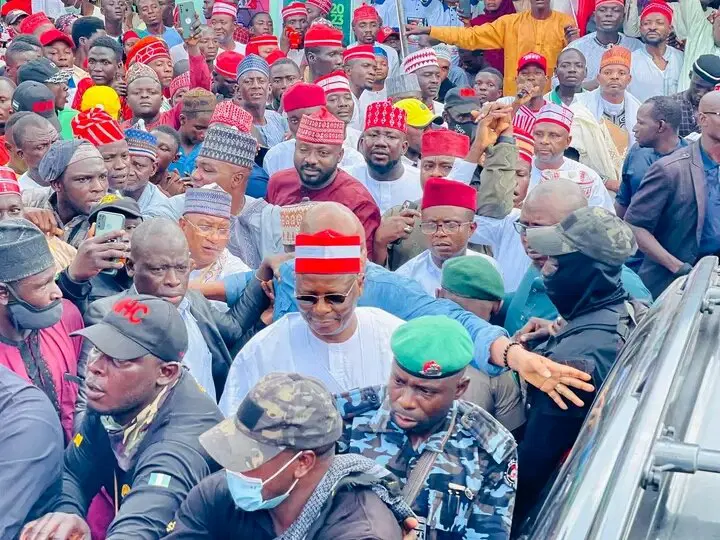
The Kwankwasiyya Movement has praised the resignations of several political appointees and saluted elected representatives who remain loyal to Senator Rabiu Musa Kwankwaso amid ongoing political changes in Kano State, the group said in a statement on Monday.
The statement by the movement’s spokesperson, Dr. Habibu Sale Mohammed, acknowledged a number of former commissioners, advisers and other political appointees who stepped down from their positions and described their actions as reflective of their personal convictions.
Kwankwasiyya also recognised serving legislators and councillors at federal, state and local levels who, the movement said, have maintained their positions and mandates.
The development comes amid political realignment in Kano, where some political figures have resigned or shifted allegiances following broader changes within the state’s party dynamics.
In the issued statement, the movement thanked former commissioners, special advisers, special assistants, managing directors, executive secretaries and other appointees who resigned “in solidarity” with the ideals of the Kwankwasiyya Movement.
Kwankwasiyya also acknowledged the Deputy Governor of Kano State and elected officials including a senator, members of the House of Representatives, members of the Kano State House of Assembly and councillors who remained in office.
The group said these officials remained in their positions despite what it described as “numerous inducements and sustained pressure” from state and federal actors.
At the grassroots level, the movement hailed council secretaries, supervisory councillors, special advisers and personal assistants who resigned from local government councils.
In the statement, the movement said those who resigned “chose the path of honour over convenience” and that their decisions, taken with full knowledge of what they were giving up, “reflect integrity, conviction and selfless service.”
The Kwankwasiyya Movement’s praise of loyalists in Kano reflects ongoing political dynamics ahead of the 2027 general elections.
The actions of political appointees and elected officials can influence party structures, alignments and public perceptions of political commitments within key Nigerian states.
The recognition by Kwankwasiyya may affect discussions among political actors in northern Nigeria and contribute to broader debates on loyalty, party alignment and political strategy.