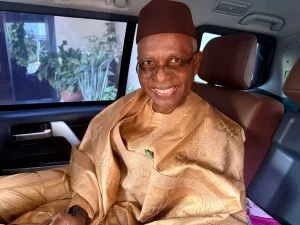
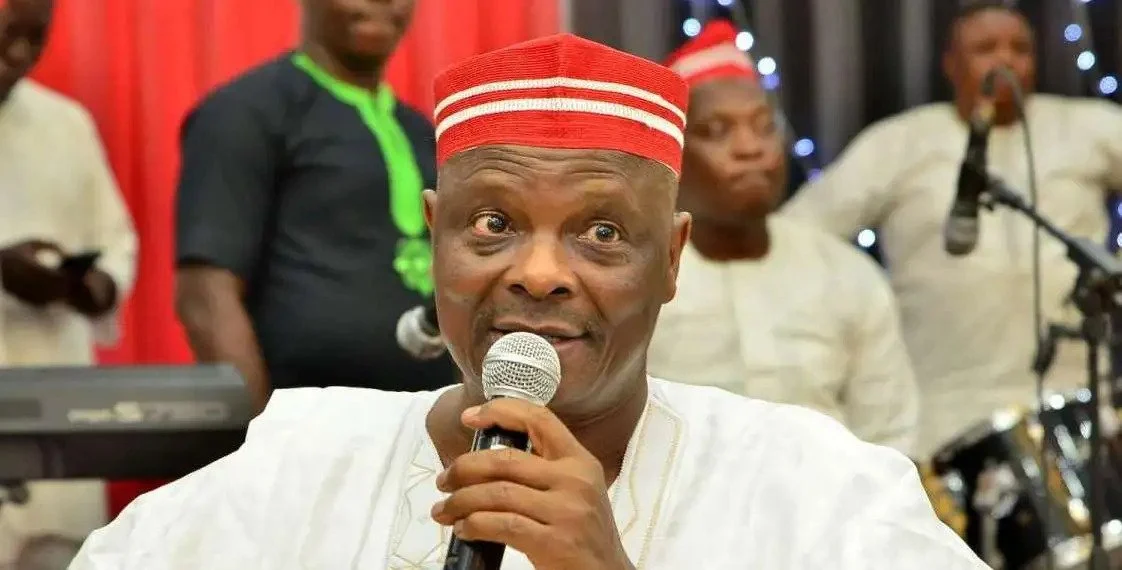
The National Leader of the New Nigeria Peoples Party (NNPP), Rabiu Musa Kwankwaso, returned to Nigeria on Sunday at Nnamdi Azikiwe International Airport, Abuja, after a trip to India, the party said, amid a proposed United States bill recommending sanctions against him and others.
Kwankwaso’s visit abroad was described by the NNPP as involving “strategic international engagements,” and he was received by party officials and senior members of the Kwankwasiyya Movement upon arrival.
His return comes four days after a bill titled the Nigeria Religious Freedom and Accountability Act of 2026 (HR 7457) was introduced in the United States House of Representatives.
The proposed legislation includes provisions for targeted sanctions, such as visa bans and asset freezes, against individuals and entities accused of involvement in alleged religious freedom violations in Nigeria.
In a video circulating on social media, Kwankwaso was seen clearing airport security dressed in a white babariga and his Kwankwasiyya cap. The arrival was confirmed by the party’s National Publicity Secretary, Ladipo Johnson.
Johnson said Kwankwaso’s trip to India included meetings with educational institutions and entailed receiving an award. He said these were the activities Kwankwaso participated in before reports about the proposed sanctions emerged.
The United States bill seeks to direct the U.S. Department of State and the Department of the Treasury to consider sanctions under the Global Magnitsky Human Rights Accountability Act against individuals and entities alleged to be responsible for “severe religious freedom violations,” including Kwankwaso, Fulani‑ethnic nomad militias, the Miyetti Allah Cattle Breeders Association of Nigeria, and Miyetti Allah Kautal Hore.
Kwankwaso had not made a public comment on the proposed sanctions at the time of his return and party officials did not provide any additional statement from him.
The linkage of Kwankwaso’s name to the U.S. bill has drawn attention amid political discourse in Nigeria. The proposed sanctions and their discussion in international legislative bodies have sparked various reactions from political actors and stakeholders within the country.
However, no formal U.S. government decision has been made, and the bill remained under consideration.