
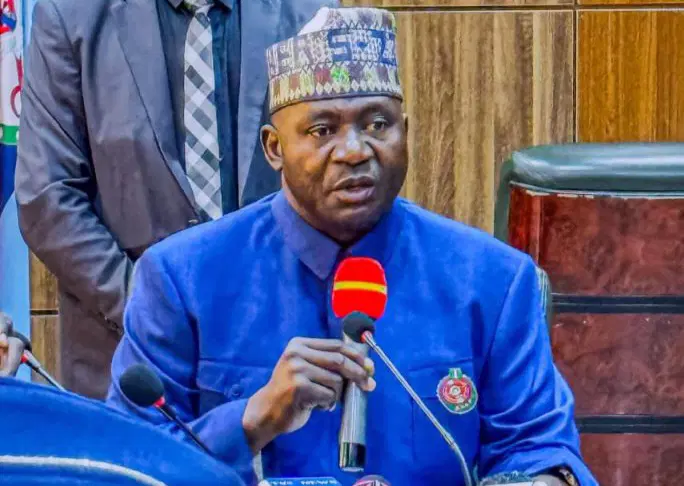
The Minister of Defence, General Christopher Gwabin Musa (rtd), has outlined four principal challenges undermining Nigeria’s security architecture as the country continues to confront insurgency, banditry, kidnapping and separatist violence.
General Musa highlighted these obstacles in an interview with BBC Hausa Service monitored in Kaduna on January 18, 2026, amid ongoing efforts by the Federal Government to strengthen national security.
General Musa affirmed that the Federal Government’s strategy combines military operations with non-kinetic measures but acknowledged that persistent difficulties hamper the restoration of peace and stability across multiple regions.
He said securing Nigeria’s borders to curb the movement of criminals remains an urgent priority.
Explaining the challenges, the defence minister identified the first major factor as the compromise of intelligence and collaboration between local communities and criminal elements. “We are appealing to people to stop dealing with these criminals.
Those who feed them, sell goods to them, or give them information should desist. Any money earned from such dealings is blood money, and God will hold everyone accountable,” he warned, stressing the critical role of citizen cooperation in defeating banditry and terrorism.
The second factor, according to General Musa, is Nigeria’s porous and extensive borders that have allowed foreign criminals to enter, launch attacks and escape with ease. He revealed plans to reinforce border security and indicated the possible construction of physical barriers at strategic points to control illegal crossings and arms smuggling.
“If we build border barriers, it will help prevent criminals from bringing in weapons and freely entering the country to commit crimes and flee,” he said.
Lack of credible grassroots intelligence was cited as the third major impediment. General Musa urged Nigerians to provide timely and reliable information to security agencies, noting that effective intelligence, especially from local communities, remains indispensable.
“When we were in Maiduguri, this was what helped us most,” he said, underscoring the need for improved citizen engagement in reporting suspicious activities.
Finally, the defence minister rejected negotiation, amnesty and ransom payments as solutions to banditry and terrorism, describing such engagements as deceptive and counterproductive.
“These people do not understand peace talks. It is all deception. Whenever they come for dialogue, they want something. If you agree, they will turn against you again,” he said, warning that ransom payments incentivise criminality and encourage the emergence of additional armed groups.
General Musa’s assertions reflect the complexity of Nigeria’s security environment, which includes a persistent Boko Haram insurgency in the North-East, separatist agitation in the South-East, and widespread banditry and kidnappings in the North-West and North-Central regions.
The defence minister called for a collective national resolve, emphasising that defeating insecurity requires discipline, cooperation and an end to all forms of support for criminal networks.
His remarks align with broader calls for enhanced inter-agency cooperation and improved intelligence sharing to address evolving threats within Nigeria’s security landscape.