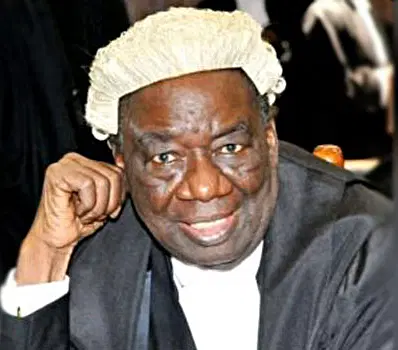
Chief Richard Akinjide (SAN), a respected legal statesman and former Attorney-General of the Federation, has called on Nigerians to reject any attempt to seize a radio station and broadcast to the public under the guise of national authority.
He made the remarks in reflections on Nigeria’s political history and the rule of law, citing the importance of constitutional order in media freedom.
Akinjide spoke against the backdrop of historical reflections and current debates on democratic norms and civil liberties in Nigeria.
He said that any forceful takeover of a broadcasting platform and then delivering a supposed national address is unacceptable and contrary to democratic values.
His comments drew on earlier published material where he emphasised that Nigerians should stand against such acts to protect national unity and legal order.
“I pray that all Nigerians should rise up and say no if anybody seizes a radio station and says ‘fellow countrymen’, ” Akinjide said in excerpts from a historical overview of politics and coups in Nigeria.
Akinjide’s comment echoes long-standing concerns over the use and abuse of state or private broadcast infrastructure during political crises. Historically, broadcasting stations have played significant roles at key moments in Nigeria’s political timeline.
For example, some broadcast outlets were used to communicate during periods of political protest or conflict, raising questions about media control and constitutional limits.
As Nigeria continues to navigate issues related to media freedom, regulation and security, the role of broadcast stations remains central to public discourse. Experts say that protecting the integrity of media platforms is crucial to ensuring that the public receives accurate information and that constitutional rights are upheld.
Akinjide’s remarks also touch on broader debates about the rule of law and constitutional governance in Nigeria. He has previously contributed opinions on issues of national structure, legal frameworks and political stability across different periods of Nigeria’s history.
His statement highlights a continued emphasis on freedom of expression and press safety, especially as citizens and institutions engage in public debate and democratic processes.