
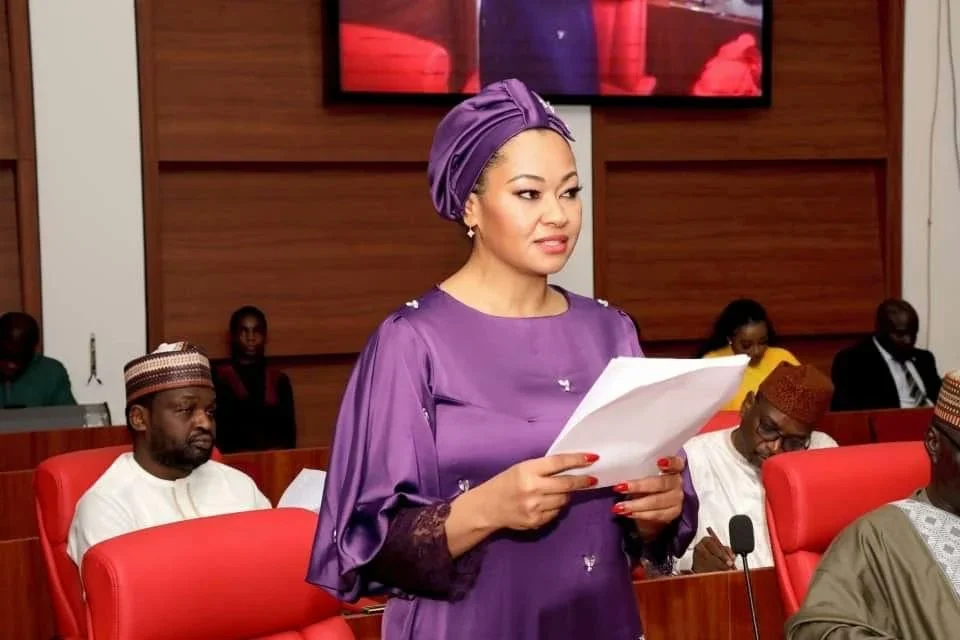
The legal dispute over the suspension of Senator Natasha Akpoti‑Uduaghan, representing Kogi Central, has escalated as Senate President Godswill Akpabio has approached the Supreme Court of Nigeria to challenge lower court rulings that questioned the legality of her suspension.
Akpabio filed the appeal on Thursday, January 22, 2026, seeking to sustain the Senate’s position and obtain judicial clarity on the matter.
Court documents filed at the apex court are marked SC/CV/1111/2025 and relate to an earlier appeal CA/ABJ/CV/1107/2025, originally arising from Federal High Court suit FHC/ABJ/CS/384/2025.
The motion, brought under the Supreme Court Rules, sections of the Supreme Court Act and constitutional provisions, requests an extension of time to apply for leave to appeal, leave to appeal on mixed law and fact, and an order deeming his notice of appeal and brief as properly filed.
Akpabio is listed as the appellant while the respondents include Senator Akpoti‑Uduaghan, the Clerk of the National Assembly, the Senate of the Federal Republic of Nigeria and the Chairman of the Senate Committee on Ethics, Privileges and Public Petitions, Senator Neda Imasuen.
The appeal seeks judicial endorsement of the Senate’s actions, particularly its disciplinary processes and internal procedures.
The controversy traces back to a February 2025 Senate plenary session during which Akpoti‑Uduaghan raised issues relating to parliamentary privilege and alleged procedural irregularities.
The matter was referred to the Senate Committee on Ethics, Privileges and Public Petitions, which recommended her suspension from Senate activities.
In response to the disciplinary action, Akpoti‑Uduaghan approached the Federal High Court in Abuja, contesting that the suspension violated her constitutional right to fair hearing and did not comply with the Senate’s Standing Orders.
On July 4, 2025, the trial court faulted the suspension, describing it as excessive and unconstitutional. The case subsequently advanced to the Court of Appeal, prompting Akpabio’s decision to escalate the matter to the Supreme Court.
In his application, Akpabio argues that the Senate acted within the scope of its powers under Section 60 of the 1999 Constitution (as amended), which allows the National Assembly to regulate its internal procedures. He also contends that presiding officers are not obligated to rule immediately on every point of privilege raised during plenary.
Senator Akpoti‑Uduaghan has maintained that her suspension was unlawful and that the Senate failed to follow its own rules before referring her to the ethics committee and imposing sanctions, thereby denying her a proper opportunity to defend herself.
The matter also involves a related contempt issue linked to a social media post made by Akpoti‑Uduaghan while the original suit was pending, which a Federal High Court ruled violated a restraining order, resulting in a fine and an order to issue a public apology. That judgment is also under appeal.
Legal observers say the Supreme Court’s eventual ruling will be critical in clarifying the limits of legislative disciplinary authority and the extent of judicial oversight in internal legislative matters.