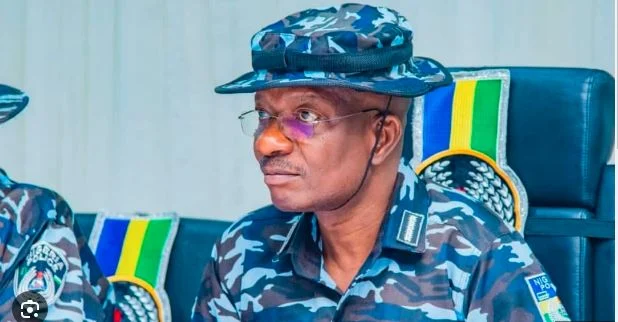
Sources familiar with the matter have said President Bola Ahmed Tinubu removed the former Inspector‑General of Police, Kayode Egbetokun, from office following disagreements over implementation of a presidential directive on police duties and the former IGP’s stance on state policing, The PUNCH reports.
Egbetokun was appointed Nigeria’s Inspector‑General of Police on June 19, 2023, and, under a 2024 amendment to the Police Act, was expected to serve a fixed four‑year term through October 2027 unless removed by the President.
His removal occurred amid a period of changes in the leadership of the Nigeria Police Force and was followed by the appointment of Assistant Inspector‑General of Police Tunji Disu in acting capacity.
The President holds constitutional authority to appoint or remove the Inspector‑General of Police, a position that leads the Nigeria Police Force and is responsible for national policing operations.
The force faces ongoing national concerns over security challenges across the country.
According to sources, one factor in the decision to remove Egbetokun was his handling of a presidential directive issued on November 23, 2025, ordering the withdrawal of more than 11,000 police officers from VIP protection duties to allow their redeployment to communities affected by kidnapping, banditry and terrorism.
The directive was reiterated by the President at a Federal Executive Council meeting on December 10, 2025, and described as non‑negotiable.
Sources said Egbetokun did not implement the withdrawal as quickly as directed and locally resisted aspects of the order during a meeting with security chiefs.
The directive’s aim, as stated by a source, was to reassign officers to areas with elevated insecurity and to rely on other security agencies such as the Nigeria Security and Civil Defence Corps for VIP protection.
The Presidency had said Civil Defence personnel are also equipped for protective duties.
Another issue cited by sources was Egbetokun’s alleged opposition to the creation of state police, a policy initiative supported by the President and currently under consideration in the National Assembly as part of constitutional amendment efforts.
According to sources, the former IGP presented a memorandum against the establishment of state policing during a public hearing, illustrating a divergence from the administration’s policy direction.
A third concern mentioned by sources related to internal conduct toward colleagues, including interactions with Tunji Disu, who was appointed acting IGP following Egbetokun’s exit. Sources described disagreements and expectations regarding senior leadership dynamics within the force.
A source close to discussions said, “He didn’t execute it [the VIP withdrawal] as quickly as the President wanted. He did it halfheartedly.”
Another source said, “He is publicly against state police. Even at the National Assembly, the police memorandum that he read when they did public hearing, he was against it.”
The leadership change at the Nigeria Police Force highlights the ongoing evolution of security strategy and reform in Nigeria, including debates over state policing and the role of the police in national security priorities.
The appointment of an acting Inspector‑General and pending confirmation proceedings underscore institutional procedures in managing police leadership transitions.