
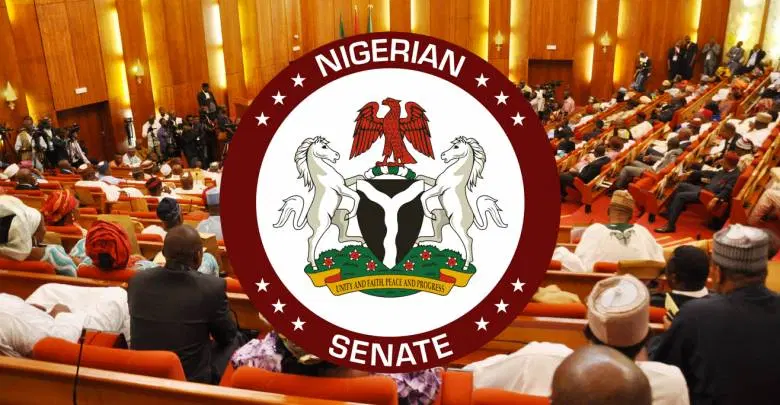
Nigeria has moved a major step closer to decentralised policing after the Senate approved the State Police Bill, a constitutional amendment that establishes separate Federal and State Police Services across the country. The landmark decision is expected to reshape Nigeria’s security framework by granting states authority to operate their own police formations under constitutional safeguards.
The legislation, transmitted to the National Assembly by President Bola Ahmed Tinubu, seeks to replace the long-standing centralised policing structure with a dual system that combines a Federal Police Service and individual State Police Services. The bill has been debated for years as governments, security experts and stakeholders argued that local policing could improve intelligence gathering, response times and community security.
The Senate approved the measure during a high-profile session that drew governors, senior government officials and legal experts to the National Assembly.
The voting process faced an unexpected challenge after the chamber’s electronic voting platform reportedly malfunctioned for more than 30 minutes. Following consultations among lawmakers, the Senate adopted a manual voting method. All 88 senators present supported the proposal through a show of hands, allowing the State Police Bill to advance despite the technical setback.
Under the amendment, every state will be permitted to establish its own police service once it meets national operational standards and receives certification as required by law.
The Federal Police Service will retain exclusive responsibility for:national security operations, terrorism investigations, cybercrime enforcement, inter-state criminal activities, arms trafficking cases, protection of federal institutions, policing of the Federal Capital Territory
State police formations will focus primarily on internal security and public safety within their respective jurisdictions. The legislation also prevents state police from operating outside their state boundaries unless specifically authorised by federal law.
To address concerns about potential misuse, the bill provides circumstances under which the Federal Government may temporarily assume operational control of a state police service. Such intervention may occur where: public order has collapsed, state police service becomes ineffective, serious operational failures emerge, there is evidence of political intimidation, fundamental rights are being systematically violated
Any intervention must be documented, communicated to relevant authorities and remain subject to legislative oversight and judicial review.
Several senior political figures attended the session, including Chief of Staff to the President, Femi Gbajabiamila, alongside Uba Sani, Dapo Abiodun and Lucky Aiyedatiwa. Lawmakers described the State Police Bill as one of the most significant constitutional reforms since Nigeria returned to democratic rule in 1999.
Supporters believe the reform will strengthen grassroots security, improve intelligence gathering and allow quicker responses to local threats such as kidnapping, banditry and communal violence. Critics have historically expressed concerns about political interference, but the Senate included extensive oversight mechanisms, fixed leadership tenures and restrictions on political directives to reduce the risk of abuse.
With Senate approval secured, the constitutional amendment now moves closer to the next stages of legislative and state-level consideration. If fully ratified, the State Police Bill will usher in the most significant restructuring of Nigeria’s policing system in decades, introducing a new era of shared security responsibilities between federal and state authorities.