The Federal Government has announced that electricity subsidy costs will now be shared with state governments alongside the federal burden under a new framework to make subsidy funding more transparent and sustainable.
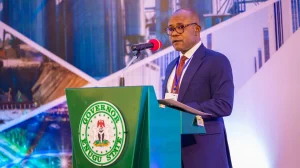
The directive was disclosed by the Director‑General of the Budget Office of the Federation, Mr. Tanimu Yakubu, during a budget preparation workshop in the nation’s capital.
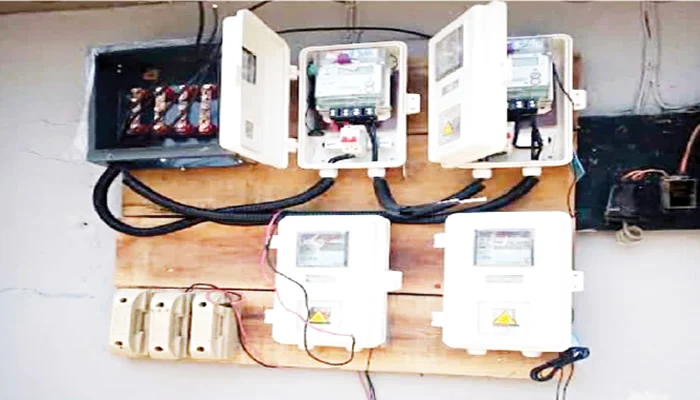
Under previous arrangements, the federal government carried the bulk of the electricity subsidy burden, which arises when tariffs are held below cost, creating a gap that constitutes a subsidy.
Officials have acknowledged that this has contributed to hidden liabilities and liquidity challenges within the power sector. The new cost‑sharing framework aims to ensure that subsidy obligations are explicit, tracked and funded by all tiers of government.
Yakubu said the President of Nigeria directed that electricity subsidy costs be explicitly identified, tracked and fairly shared across the federal, state and local governments in budget processes.
He emphasised that clearly defined cost‑sharing would prevent the recurrence of unpaid obligations and liquidity crises in the power market.
Under the arrangement, funding for electricity subsidies will be drawn from the Power Assistance Consumers Fund (PCAF), a government‑backed pool designed to subsidise electricity bills for low‑income and vulnerable households and ensure stability in the sector.
States that have benefited politically from subsidy programmes will now participate in financing the gap created by the subsidy, in line with the directive.
Officials said that making the subsidy cost shareable is part of broader reforms to enhance fiscal discipline.
The Budget Office boss stated that all ministries, departments and agencies must clearly disclose and budget for subsidy‑related costs to avoid pushing unfunded liabilities into the electricity market.
Representatives of the Nigerian Governors’ Forum said they were reviewing the directive and were not ready to make a formal comment.
Similarly, State Electricity Regulatory Commissions from various states such as Lagos, Imo, Enugu, Oyo, Ondo, Edo, Niger and Anambra convened a virtual meeting to assess the implications of the cost‑sharing directive.
Experts on energy policy have noted that shared financial responsibility could create incentives for states to support cost‑reflective efficiency and targeted protections for vulnerable consumers, but they also highlight the need for clear implementation guidelines to ensure fairness across states with varying fiscal capacities.
The Director‑General of the Budget Office said: “If we want a stable power sector, we must pay for the choices we make. When tariffs are held below cost, a gap is created. That gap is a subsidy, and a subsidy is a bill.”
The shared subsidy framework represents a significant fiscal shift in Nigeria’s electricity policy. It is expected to encourage transparency in fiscal planning and compel all tiers of government to acknowledge and fund electricity affordability interventions.
Policy analysts say that clear cost allocation can help reduce hidden sector liabilities and strengthen long‑term power sector stability.
Under the new directive from the Federal Government, state governments will join the federal government in bearing the costs of electricity subsidies.
The framework is designed to make subsidy costs transparent and enforceable across all levels of government while supporting sector stability and accountability.