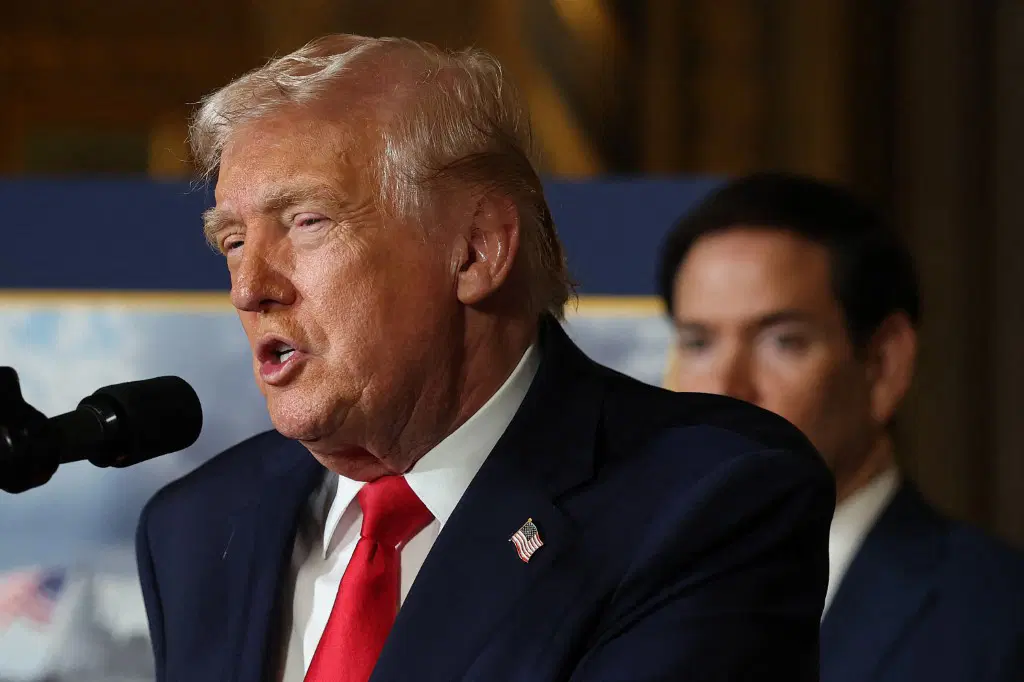
Former U.S. President Donald Trump has reiterated his stance that the United States could carry out further military strikes in Nigeria if attacks on Christian communities persist, underscoring a contentious and escalating diplomatic issue between Washington and Abuja.
In a January 2026 interview with The New York Times, Trump addressed whether the Christmas Day missile strikes against Islamic State-linked militants in northwest Nigeria signalled broader U.S. military involvement. He said, “I’d love to make it a one-time strike. But if they continue to kill Christians it will be a many-time strike,” suggesting that additional operations could follow if the violence against Christians does not subside.
The Christmas Day operation, described by both U.S. and Nigerian officials as jointly conducted against terrorist elements, marked a rare instance of direct U.S. military action in Nigeria. While Abuja emphasised that decisions around the strike remained under Nigerian control, Trump’s comments have injected new uncertainty into bilateral security cooperation.
Trump’s remarks came amid broader criticisms by some foreign policymakers who have framed violence in Nigeria’s conflict zones through the lens of religious persecution. While Nigeria faces complex security challenges that affect both Muslim and Christian communities, the Nigerian government has consistently rejected claims that Christians are being systematically targeted.
During the same interview, Trump acknowledged that Muslims are also among the casualties of the ongoing security crisis, stating, “I think that Muslims are being killed also in Nigeria. But it’s mostly Christians.” This assertion reignited debate over the characterization of violence in Nigeria’s conflict-affected regions, where various armed groups operate and civilian suffering is widespread.
The implications of Trump’s statements are significant for Nigeria’s foreign relations and internal policy. Critics argue that framing the conflict in exclusively religious terms could oversimplify the underlying causes of insecurity, which include banditry, insurgency, and competition over resources. Proponents of strong action contend that international attention could pressure local authorities to intensify protection for vulnerable communities.
Observers note that any expansion of U.S. military involvement in Nigeria would necessitate careful negotiation between the two countries, particularly given concerns about sovereignty, regional stability, and the broader impact of foreign military operations in West Africa.
The evolving discourse around violence against civilians, external intervention, and Nigeria’s security policy is likely to remain a focal point of regional and international attention in the coming months.