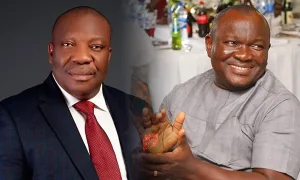
The PDP crisis deepens as conflicting positions emerge within the party’s leadership structure, with the Board of Trustees (BoT) countering recent directives attributed to Senator Adolphus Wabara and reaffirming support for the Abdulrahman Mohammed and Samuel Anyanwu-led National Working Committee (NWC).
The PDP crisis deepens amid ongoing legal and factional disputes over legitimacy, control of the national secretariat, and recognition of party leadership structures ahead of the 2027 general elections.
The PDP crisis deepens against the backdrop of prolonged internal divisions that have split the party into competing leadership blocs. The crisis intensified following court rulings that invalidated earlier national conventions and raised questions over the legitimacy of successive party executives.
A Federal High Court judgment in Ibadan and subsequent appellate decisions had earlier nullified the party’s November 2025 national convention, which produced a faction led by Kabiru Tanimu Turaki, SAN. The rulings triggered competing claims to leadership between rival groups within the party structure.
The PDP crisis deepens further as the Wike-aligned faction consolidated its position after a separate national convention in Abuja, where Abdulrahman Mohammed and Samuel Anyanwu were elected as National Chairman and National Secretary through consensus.
The Independent National Electoral Commission (INEC) subsequently published the Mohammed-led structure as the recognised leadership, further intensifying disputes within the party.
The PDP crisis deepens following a BoT intervention that challenged interpretations of earlier internal directives and sought to assert its constitutional role in stabilising the party. The BoT had previously assumed a coordinating role after court decisions that disrupted existing leadership arrangements.
In its earlier position, the BoT argued that conflicting leadership claims created a governance vacuum within the party structure, requiring constitutional intervention to restore order and ensure administrative continuity.
The PDP crisis deepens as the Mohammed and Anyanwu-led NWC continues to operate under INEC recognition, reinforcing its claim as the legitimate national leadership of the party.
Meanwhile, internal disagreements persist over reconciliation frameworks, with competing factions maintaining differing interpretations of court rulings and party constitutional provisions guiding leadership selection and convention validity.
The PDP crisis deepens with significant implications for internal democracy, institutional authority, and electoral preparedness. The existence of parallel leadership claims risks weakening coordination ahead of party primaries and national elections.
The dispute also raises questions about the enforceability of internal party constitutions, especially where judicial rulings intersect with political resolutions. INEC’s recognition of one faction further complicates reconciliation efforts and may shape future electoral alignments within the opposition party.
At the governance level, the ongoing conflict highlights structural challenges in managing party unity in Nigeria’s multi-faction political environment, particularly where legal and constitutional interpretations differ among stakeholders.