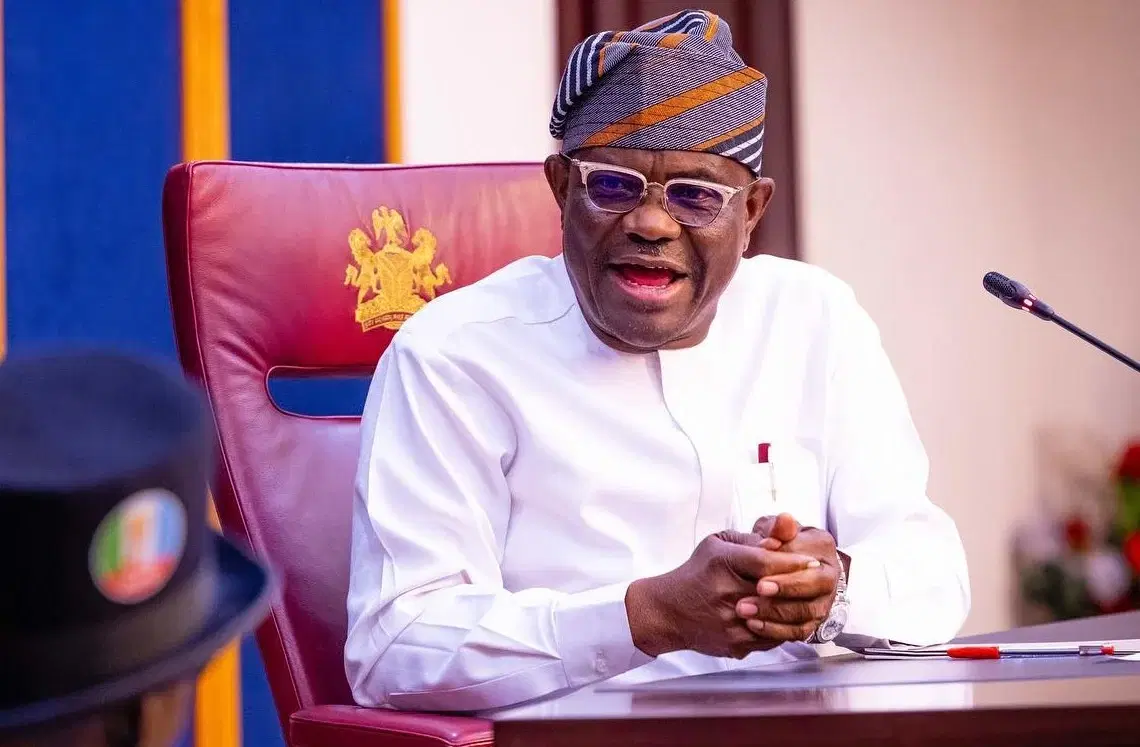
The Makinde Backed PDP has criticised recent remarks made by the Minister of the Federal Capital Territory, Nyesom Wike, describing them as inappropriate and damaging to public discourse. In a statement issued on Wednesday, the Makinde Backed PDP condemned the comments made during a media engagement, stating that they reflected poorly on leadership conduct within the party.
The Peoples Democratic Party has been experiencing internal divisions involving factions aligned with Oyo State Governor Seyi Makinde and those associated with Nyesom Wike. These divisions have intensified amid ongoing debates over party leadership, structure, and preparations for upcoming primaries.
The response from the Makinde Backed PDP follows a recent media appearance by Wike, which has generated reactions within the party and among political observers.
In a statement signed by its National Publicity Secretary, Ini Ememobong, the party described the minister’s comments as “an unsolicited display of political recklessness” and accused him of targeting respected Nigerians.
The statement further noted that the media engagement, which it described as publicly funded, “threw decency to the wind” and amounted to a performance “full of sound and fury, signifying nothing.”
Rather than focusing on specific claims, the Makinde Backed PDP said its response was intended as an apology to Nigerians for previously supporting Wike’s rise in public office. “We regret offering a platform to a person whose conduct and utterances have become a national embarrassment,” the statement said.
The party also advised individuals who may feel defamed by the minister’s remarks to seek legal redress, emphasizing that all citizens are subject to the law. It added that internal party activities, including the sale of nomination forms, preparation for primaries, and plans for a national convention, would proceed as scheduled.
The reaction by the Makinde Backed PDP highlights ongoing tensions within the party, particularly between competing leadership factions.
Political analysts note that public disagreements of this nature may affect party cohesion and influence internal processes ahead of elections. The situation also reflects broader challenges within opposition parties as they manage internal disputes while preparing for national contests.