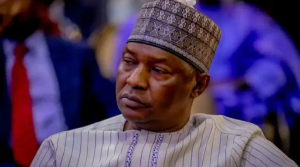

Former Minister of Innovation, Science and Technology, Chief Uche Geoffrey Nnaji, has maintained that he has not been formally served with any criminal charge in relation to the ongoing investigations into his academic records, urging the public to allow the legal process to unfold without prejudice.
In a statement issued by his legal representatives, the former minister said media reports should not be mistaken for official court processes, stressing that criminal proceedings can only properly commence after an accused person has been formally served in accordance with the law.
The legal team explained that, while reports have emerged alleging that criminal charges have been filed, neither Nnaji nor his counsel had, as of the time of the statement, received any official process notifying him of an arraignment or requiring him to enter a plea.
According to the statement, should any formal proceedings arise, the former minister is prepared to respond through the courts, expressing confidence that the judicial system provides the appropriate forum for resolving disputed facts.
His lawyers further observed that public commentary surrounding the matter has often failed to distinguish between investigations, the filing of charges and the commencement of a criminal trial, resulting in widespread misunderstanding of the legal position.
They reiterated that the Constitution guarantees every citizen the right to due process and the presumption of innocence, adding that allegations remain subject to proof before a court of competent jurisdiction.
The statement also referenced the pending civil proceedings initiated by Nnaji concerning his academic records, noting that those matters remain before the Federal High Court and should be determined through established judicial procedures rather than public speculation.
Reaffirming his respect for the rule of law, the former minister said he would continue to cooperate with lawful processes while pursuing all remedies available to him under the Constitution.
The legal team appealed to the public and the media to exercise restraint in reporting ongoing judicial matters, emphasizing that confidence in the administration of justice depends upon allowing the courts to determine disputes on the basis of evidence and law, rather than public narratives.