
The Federal Government says its cash transfer scheme has delivered more than N600 billion to over 10 million households since President Bola Tinubu assumed office.
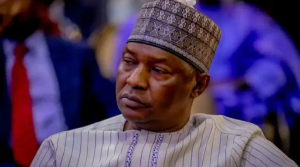
The Minister of Humanitarian Affairs and Poverty Reduction, Bernard Doro, disclosed this on Wednesday during an interview on Politics Today, a Channels Television programme.
Doro said the intervention was designed to assist poor and vulnerable households while improving their living conditions.
He noted that the number of beneficiaries could represent about 40 million people, based on an estimated average household size of four.
“We have done over N600 billion in cash transfers to be able to support vulnerable Nigerians within three years,” Doro said.
Beyond the cash transfer scheme, the minister said the government had introduced vocational training programmes targeting vulnerable Nigerians.
According to him, more than 18,000 people had received vocational training, starter kits and stipends under the initiative.
He added that beneficiaries were also trained in business management and accounting to improve their ability to establish and manage businesses.
The government, he said, was also supporting farmers through another intervention focused on improving livelihoods and reducing poverty.
Defending the cash assistance programme, Doro argued that payments that might appear small to wealthier Nigerians could have significant value for extremely poor households.
“N25,000 can look very small to elites, but not to the poorest of the poor,” he said.
The minister explained that his responsibility was to ensure that improvements in the wider economy translated into tangible benefits for vulnerable Nigerians.
“My job is to translate macroeconomic gains as the Minister of Humanitarian Affairs and Poverty Reduction. I translate the microeconomic gains to the micro level, and you can see the traction,” he said.
Doro also addressed concerns over the risk of food insecurity in northern Nigeria.
He said the government was monitoring projections that more than 70 million people across nine conflict-affected states could experience acute food insecurity.
However, he cautioned that the figures represented projections and should not be interpreted as confirmation that every person identified would necessarily become food insecure.
The minister disclosed that the government had recently introduced a presidential intervention focused on food and nutrition across 10 northern states.
He said the Federal Government would continue monitoring the situation and respond where additional interventions became necessary.
The government, he added, would continue combining direct assistance, skills development and agricultural support as part of its broader efforts to reduce poverty and improve household welfare.