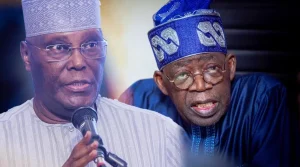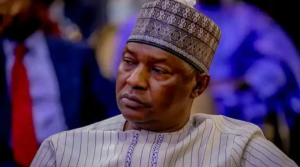
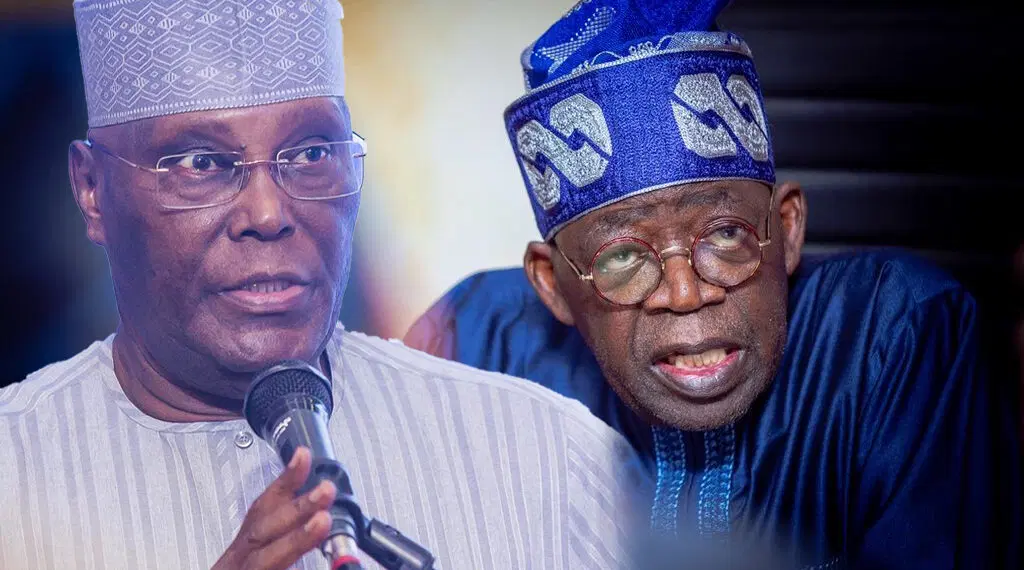
Former Vice President and African Democratic Congress, ADC, presidential candidate Atiku Abubakar has called on President Bola Tinubu to make public the full details of Nigeria’s health agreement with the United States.
Atiku’s demand followed disclosures surrounding Ghana’s decision to reject a proposed US health arrangement over concerns relating to medical records, pathogen information, funding commitments and the inspection of imported medical products.
In a statement issued by his Director of Strategic Communication, Phrank Shaibu, Atiku said Nigerians needed to know whether any of the provisions that raised concerns in Ghana were included in Nigeria’s agreement with Washington.
“At this point, Nigerians do not know whether the provisions Ghana rejected are in the agreement Tinubu signed,” Atiku said.
Nigeria and the United States signed a five-year health Memorandum of Understanding, MoU, on December 19, 2025. The Federal Ministry of Health says the agreement covers disease surveillance, outbreak response, laboratory systems, pathogen sample procedures, health data systems, essential health commodities and primary healthcare.
Under the agreement, the US is expected to provide nearly $2 billion in grant support, while Nigeria has committed to increasing domestic health financing by nearly $3 billion over the five-year period. The Federal Government says the arrangement is intended to strengthen health security and move Nigeria towards greater self-reliance in healthcare financing.
Atiku questioned whether Nigeria had sufficient capacity to meet its financial obligations under the agreement, particularly in light of existing challenges in the health sector.
He cited the country’s maternal mortality burden and referred to comments attributed to Coordinating Minister of Health and Social Welfare, Prof. Muhammad Ali Pate, concerning the release of funds for capital projects at the ministry’s headquarters in 2025.
According to Atiku, the government should explain how it intends to fulfil multibillion-dollar commitments under the agreement if approved domestic health allocations are not fully released.
He also called for the publication of the complete MoU and any accompanying protocols, annexes, data-sharing arrangements, specimen-sharing agreements and financial commitments.
Among the questions he wants answered are whether Nigerian medical information or pathogen samples can be transferred outside the country, who would have access to such information and what safeguards are in place to protect patients.
He also asked the government to clarify whether the National Agency for Food and Drug Administration and Control, NAFDAC, retains full authority to inspect medicines and other medical products covered by the arrangement.
Atiku said Nigeria should welcome international partnerships capable of improving healthcare and saving lives, but argued that such agreements should be transparent and subject to public scrutiny.
“Ghana examined the proposal before it and said no. Nigeria has already signed. Tinubu must now tell Nigerians exactly what he said yes to,” he said.
The Federal Ministry of Health has described the Nigeria-US agreement as a landmark partnership aimed at strengthening health security, expanding primary healthcare and increasing domestic ownership of the country’s health system.