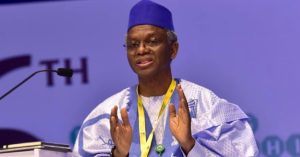
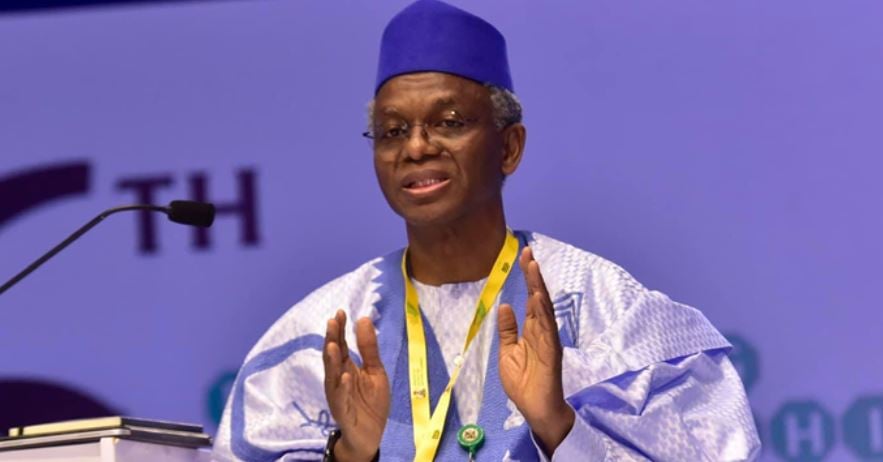
The Federal High Court in Abuja has fixed October 26 to rule on former Kaduna State Governor Nasir El-Rufai’s application seeking to end his trial over alleged unlawful interception of the telephone communications of National Security Adviser, Nuhu Ribadu.
El-Rufai, through his legal team led by Senior Advocate of Nigeria, Paul Erokoro, is asking the court to discharge and acquit him on the five-count amended charge filed against him by the Federal Government through the Department of State Services, DSS.
The former governor’s lawyers argued that the prosecution had failed to present sufficient evidence to establish a prima facie case requiring him to enter a defence.
They therefore urged Justice Joyce Abdulmalik to uphold the no-case submission and terminate the proceedings.
Opposing the application, prosecution counsel Oluwole Aladedoye, SAN, asked the court to dismiss the submission and direct El-Rufai to begin his defence.
Aladedoye argued that the oral and documentary evidence already presented before the court was sufficient to connect the defendant to the allegations contained in the charge.
After hearing arguments from both sides, Justice Abdulmalik adjourned the matter until October 26 for ruling.
The Federal Government had earlier closed its case after calling two witnesses.
The case stems from comments El-Rufai made during an appearance on Arise Television’s Prime Time programme on February 13.
The prosecution alleges that during the interview, the former governor admitted knowing and having an association with a person who unlawfully intercepted Ribadu’s telephone communications.
He is also accused of failing to report the alleged interception to the appropriate security authorities.
The Federal Government has linked the alleged conduct to provisions of the Cybercrimes (Prohibition, Prevention, etc.) (Amendment) Act, 2024, relating to national security and public safety.
El-Rufai has disputed the prosecution’s interpretation of his television comments. He argued that what he said during the programme was a casual remark and could not legally be treated as a confession.
According to his legal argument, a confession must be made voluntarily under circumstances that satisfy the applicable legal safeguards, including where necessary a statement made under caution.
He maintained that his television interview was a public discussion in which he was neither under caution nor being interrogated as a suspect.
The former governor had also challenged the competence of the charge and presented 17 grounds in support of his request for the case to be quashed.
The court, however, previously declined to terminate the proceedings and instead directed that the matter proceed on an accelerated basis.
El-Rufai had separately sought a relaxation of his bail conditions, which he described as difficult to meet.
Among the conditions he wanted varied was a requirement for Level 17 civil servants with properties in Maitama or Asokoro, as well as verification and attestation letters from the Kaduna State traditional council.
The prosecution opposed the request, arguing that qualified public officers capable of satisfying the conditions were available.
On July 23, Justice Abdulmalik rejected the application, holding that there was no sufficient reason to alter the original conditions, which she said were designed to ensure the defendant’s attendance at trial.
El-Rufai served as Kaduna State governor from 2015 to 2023 and previously served as Minister of the Federal Capital Territory during the administration of former President Olusegun Obasanjo.
The court’s October 26 ruling will determine whether the prosecution has established a case requiring the former governor to enter a defence.