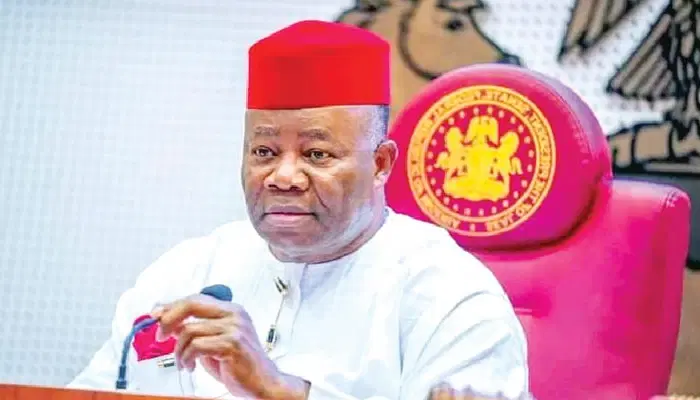
Senate President Godswill Akpabio has said the African Democratic Congress is effectively “dead” following a wave of ADC defections in the National Assembly. The remark was made during plenary on Tuesday after several lawmakers formally announced their movement to other political parties. Akpabio’s comments come amid increasing ADC defections, which have reshaped party alignments within the legislature ahead of the 2027 elections.
The African Democratic Congress has recently faced internal challenges, including leadership disputes and litigation, which have contributed to instability within the party structure. These developments have coincided with broader political realignments across opposition parties as stakeholders position themselves for the 2027 general elections.
In recent weeks, multiple lawmakers have exited the party, citing internal divisions and unresolved legal issues. The growing trend of ADC defections has drawn attention to the party’s weakening presence within the National Assembly.
During plenary, Akpabio reacted to the frequent announcements of defections, suggesting that lawmakers should consolidate their notices rather than present them individually. He said: “Maybe all those defecting from ADC should just compile everything… because I think ADC is dead.”
The Senate formally announced the defection of lawmakers, including Victor Umeh, who moved to the Nigeria Democratic Congress (NDC), citing internal crises and “unending litigation” within the party.
Akpabio also commented on the frequency of political movements, questioning repeated defections by some lawmakers within short periods. In the House of Representatives, no fewer than 16 members were also reported to have left the ADC for the NDC, further highlighting the scale of ADC defections across both chambers.
A resignation letter read on the Senate floor indicated that ongoing disputes within the party had made continued membership difficult for some lawmakers, reinforcing concerns about sustained ADC defections.
The rise in ADC defections signals shifting political alliances within the National Assembly, which may affect legislative dynamics and party representation. A decline in membership could reduce the party’s influence in parliamentary proceedings and committee structures.
The development also reflects broader instability within opposition platforms, where internal disputes and leadership disagreements have contributed to fragmentation. Analysts note that continued ADC defections could impact coalition-building efforts ahead of the 2027 elections.