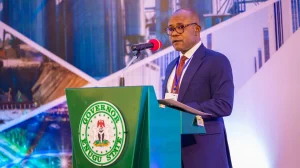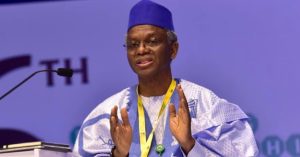
The Independent Corrupt Practices and Other Related Offences Commission, ICPC, has urged Nigerians to reject the belief that corruption is unavoidable or that “everyone is doing it.” The commission’s Chairman, Dr Musa Adamu Aliyu, warned that repeatedly presenting corruption as widespread could create public resignation and weaken citizens’ willingness to resist corrupt practices.
Aliyu spoke in Abuja on Thursday at the 4th Economic Confidential Lecture and 6th National Spokespersons Awards organised by Image Merchants Promotion Limited, publishers of Economic Confidential. The event was held under the theme, “Anti-Corruption Reforms, Economic Stability and Effective Communication.”
Aliyu said anti-corruption campaigns could become counterproductive when their messages focused mainly on how deeply corruption was embedded in society. According to him, repeatedly telling citizens that corruption is everywhere could reinforce the perception that the practice is inevitable and discourage individuals from taking a stand against it.
He said anti-corruption communication should instead promote positive social norms and demonstrate that Nigerians still reject corrupt behaviour. The ICPC chairman also advocated connecting anti-corruption messages to visible results, including completed government projects, recovered public funds and improvements in public services.
He said the growing number of citizens reporting suspected corrupt practices was evidence that Nigerians were increasingly prepared to challenge corruption. Aliyu said this growing willingness should be supported by public institutions through communication that is honest, consistent and proactive.
“Communication must be strategic, not merely loud,” he said, citing emerging research and guidance from the Basel Institute on Governance.
He warned that messages emphasising the prevalence of corruption could breed fatigue and resignation and, in some circumstances, inadvertently normalise the conduct being condemned. Such messaging, he said, could strengthen the belief that “everyone is doing it” and reduce an individual’s resolve to resist corruption.
Aliyu also highlighted the role of the media in strengthening Nigeria’s anti-corruption campaign. While describing the media as strategically important, he said its greatest asset remained credibility.
He urged journalists and media organisations to prioritise accuracy, professionalism, fairness and objectivity instead of sensationalism. According to him, effective anti-corruption communication must be capable of informing citizens while maintaining public trust in the institutions and individuals delivering the message.
Earlier, the Publisher of Economic Confidential, Yushau A. Shuaib, said the lecture was designed to examine the relationship between anti-corruption reforms, economic stability and strategic communication. He said the objective was to explore how effective communication could strengthen public confidence and institutional credibility.
Shuaib also highlighted the National Spokespersons Awards, which were formally launched in 2020 to recognise professionalism, excellence and integrity in public communication. He said the organisation had also unveiled a research project examining the role of Artificial Intelligence in crisis communication in Nigeria.
According to Shuaib, the research was reviewed by communication scholars, supported by the National Information Technology Development Agency, NITDA, and shortlisted for the 2026 Golden World Awards in Athens, Greece. The discussions reinforced the need for institutions to communicate anti-corruption efforts in ways that encourage public participation rather than deepen the perception that corrupt practices are unavoidable.