The proposed Obi Kwankwaso Alliance ahead of the 2027 presidential election is encountering resistance from some northern political stakeholders and sections of the electorate, even as party officials maintain that support for the movement is expanding across the region.
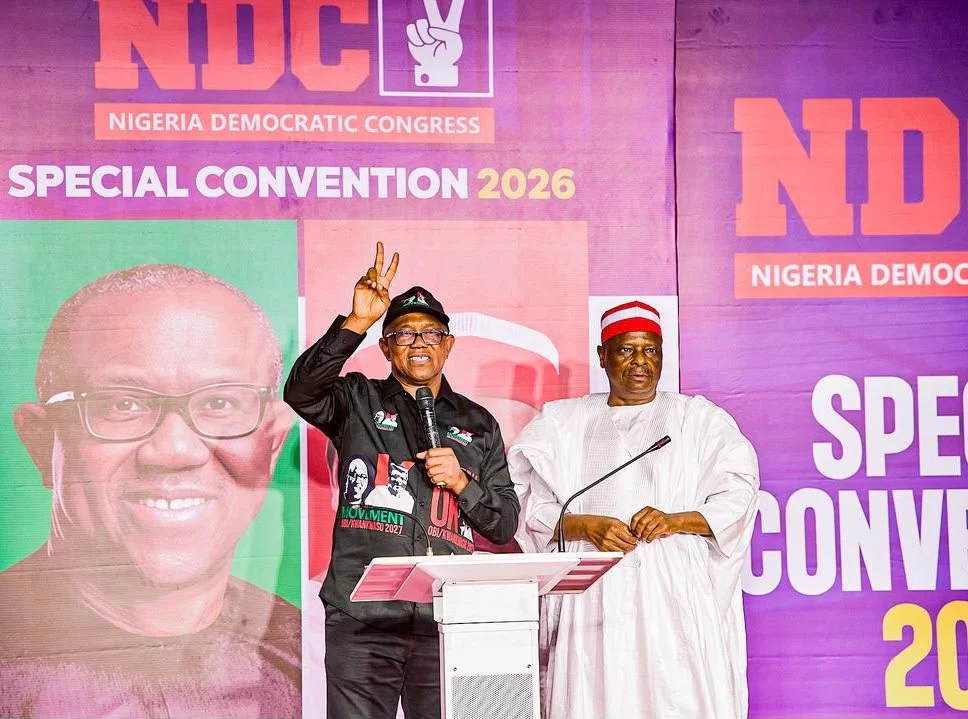
Recent political developments have placed the Obi Kwankwaso Alliance at the centre of national discussions ahead of the next general election. While supporters view the partnership between former Anambra State Governor Peter Obi and former Kano State Governor Rabiu Kwankwaso as a significant political force, critics argue that the alliance has yet to secure broad acceptance in parts of Northern Nigeria.
Reports indicate that campaign materials critical of the alliance have circulated across some northern communities, while incidents involving campaign posters have also been reported in Kano State.
The National Publicity Secretary of the Arewa Consultative Forum (ACF), Prof. Tukur Muhammad-Baba, said the Nigeria Democratic Congress (NDC), the platform associated with the alliance, remains relatively unknown among many northern voters. According to him, political visibility remains a major challenge.
“The average northerner is tired of being told that having a northern candidate or a Muslim-Muslim ticket is the solution to Nigeria’s problems. People are becoming more careful because previous expectations have not produced the desired results,” Muhammad-Baba said. He also questioned the current political strength of Kwankwaso outside Kano State, noting uncertainty about the extent of his influence across the region.
Similarly, President of the Arewa Youth Consultative Council, Zaid Ayuba, argued that Peter Obi faces trust issues among some northern voters. He claimed that Obi’s perceived stance on the proscribed Indigenous People of Biafra (IPOB) continues to generate concerns among sections of the electorate.
Ayuba said, “Obi and Kwankwaso are known in the North, just like Tinubu and Atiku are known. But politics is different from victory.”
A political science professor in Sokoto, who requested anonymity, also argued that the NDC lacks substantial visibility in several northern states, including Kaduna, Jigawa, Katsina, Niger, Taraba, Zamfara, Plateau, Benue and Gombe. Meanwhile, the Northern Youth Assembly criticised Kwankwaso’s participation in the alliance, describing it as a departure from what it called the traditional political values of the Kwankwasiyya movement.
Despite the criticism, officials of the NDC insist the Obi Kwankwaso Alliance is gaining traction in Northern Nigeria. The party’s chairman in Borno State, Haruna Amuda, said the party had witnessed significant membership growth and defections from rival parties.
“We are currently experiencing massive defections into the party, particularly from the ADC. They are coming in their thousands to register with us,” Amuda stated.
In Jigawa State, party chieftain Abdulrazak Birnin-Kudu said coordinators had been appointed across all 27 local government areas, with youth mobilisation driving grassroots expansion.
The National Co-Chairman of the NDC Coalition Alliance Network, Zakari Garba, described the Obi Kwankwaso Alliance as one of the strongest political partnerships being discussed ahead of the 2027 election. According to him, Obi and Kwankwaso collectively represent leadership experience, grassroots influence, accountability and national unity.
The differing views surrounding the alliance highlight the evolving political landscape ahead of the 2027 elections. While critics point to challenges relating to visibility, acceptance and political perception, supporters argue that economic hardship, insecurity and voter dissatisfaction are creating opportunities for alternative political platforms.
The debate also reflects broader competition among emerging and established political forces seeking influence in Northern Nigeria, a region widely regarded as critical to presidential election outcomes.
As preparations for the 2027 elections continue, the Obi Kwankwaso Alliance remains a subject of intense political debate. While some northern stakeholders question its acceptance and influence, party leaders insist their structures and support base are expanding across the region. The coming months are expected to provide a clearer picture of the alliance’s strength and electoral prospects.