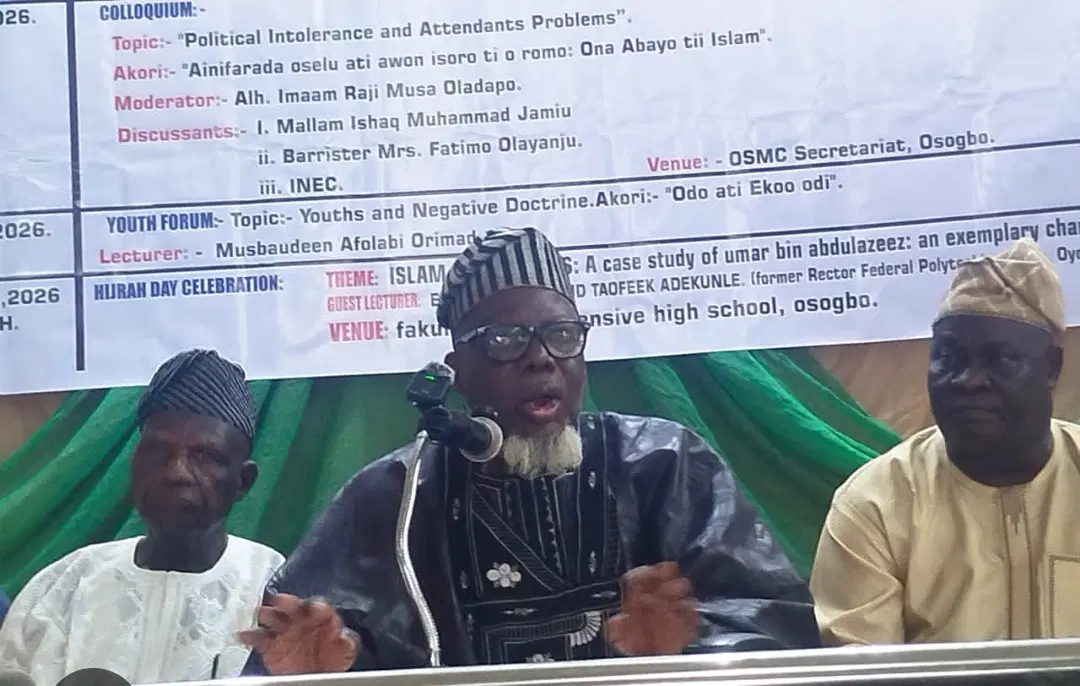
An Islamic scholar, Dr. Abdulateef Abdulhakeem, has criticised the practice of pardoning and reintegrating convicted criminals into society, arguing that such actions conflict with Islamic principles of justice and accountability.
Speaking during the 20th anniversary celebration of the Osun State Independent Shari’ah Panel in Osogbo, Abdulhakeem said Shari’ah courts Nigeria should be strengthened to ensure that justice is administered in accordance with constitutional provisions and Islamic teachings.
Abdulhakeem said the implementation of Shari’ah promotes accountability and discourages the release of convicted offenders through political influence or executive discretion. According to him, Islam does not support what he described as the unjust use of executive powers to free convicted criminals. “Shari’ah is meant to establish justice. Islam does not support what I describe as a ‘prerogative of injustice,’ whereby a killer is released because of closeness to those in authority.
“Nigerians do not want Shari’ah because it does not support mercy for criminals or their reintegration into society,” he said.
The cleric urged federal and state governments to fully implement constitutional provisions relating to Shari’ah courts Nigeria, particularly Section 275 of the 1999 Constitution.
He maintained that Muslims are only seeking rights already guaranteed under the Constitution. “In Islam, we are not asking for anything beyond what the Constitution already provides. Section 275 makes provision for Shari’ah courts, and any state that desires one should establish it.
“Even if there is only one Muslim in a state, that person’s rights, including freedom of religion, association and personal liberty, must be protected through the establishment of the appropriate institution,” Abdulhakeem said.
Abdulhakeem explained that the primary responsibility of Shari’ah courts Nigeria is to regulate the conduct of Muslims and ensure compliance with Islamic teachings. He stated that no religion permits unlawful killings or acts of terrorism, stressing that properly established Shari’ah institutions could help address criminal behaviour among adherents of the Islamic faith.
“If there is a Shari’ah court, it will regulate the excesses of Muslims. Government can empower it to address criminal tendencies among those who profess the Islamic faith because no religion permits the unlawful killing of others. “In the name of Islam, you cannot kill or engage in terrorism because such acts are prohibited by the Qur’an,” he said.
He added that Shari’ah courts are intended for Muslims and do not replace Nigeria’s conventional judicial system, which remains available to all citizens.
Earlier, President of the Osun State Muslim Community, Alhaji Mustafa Olawuyi, commended individuals who have contributed to the development and activities of the Osun State Independent Shari’ah Panel since its establishment. The anniversary event brought together Islamic scholars, community leaders and other stakeholders to reflect on the role of Shari’ah institutions in promoting justice and resolving disputes within the Muslim community.