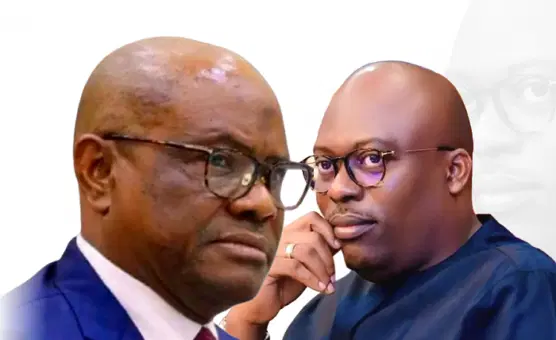
Political tensions in Rivers State have continued to escalate as the Wike and Fubara rivalry deepens ahead of the 2027 general elections, with new developments reflecting widening divisions between supporters of former Governor Nyesom Wike and Governor Siminalayi Fubara. The situation has remained a major point of political discussion within and outside the state.
The political disagreement between Governor Siminalayi Fubara and former Rivers State Governor Nyesom Wike has persisted since internal disputes emerged over political control and governance direction within the state.
Wike, who currently serves as Minister of the Federal Capital Territory, played a significant role in Fubara’s emergence during the 2023 governorship election. However, disagreements later surfaced between both camps, resulting in political tensions involving party structures, governance decisions, and the Rivers State House of Assembly.
The growing Wike and Fubara rivalry has since shaped political alignments and strategic consultations within Rivers State ahead of future elections.
According to Vanguard, recent political developments in Rivers State indicate that divisions between both camps remain unresolved as loyalists continue mobilisation and consultations ahead of the 2027 elections.
The report noted that political actors aligned with both Wike and Fubara have intensified efforts to strengthen influence across party structures and local political networks within the state. The Wike and Fubara rivalry has also continued to influence conversations around political succession, institutional control, and leadership within Rivers politics.
Observers note that several reconciliation attempts initiated by political stakeholders and party leaders have yet to produce a lasting resolution to the conflict. The political crisis previously triggered divisions within the Rivers State House of Assembly, with lawmakers split across competing political loyalties linked to both camps.
Judicial interventions and federal-level consultations have also played roles in efforts aimed at stabilising the political environment in Rivers State. The report further indicated that preparations ahead of the 2027 elections are contributing to increased political positioning and alliance-building by supporters of both leaders.
Analysts say the Wike and Fubara rivalry remains one of the most closely monitored political developments in Nigeria due to Rivers State’s strategic economic and political importance. The situation has also generated wider debates concerning party discipline, internal democracy, and the continued influence of former governors in state-level politics.
As consultations and political activities continue, the Wike and Fubara rivalry is expected to remain central to discussions surrounding governance and electoral calculations in Rivers State. The prolonged tensions between both camps highlight broader concerns regarding governance stability, institutional coordination, and political cohesion within Rivers State.
Political analysts note that the Wike and Fubara rivalry could shape future political alliances, voter mobilisation efforts, and party structures ahead of the 2027 elections. The development also reflects increasing political activity and strategic positioning across major political blocs as preparations for future elections intensify nationwide.