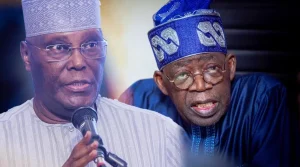

The African Democratic Congress, ADC, says it can defeat President Bola Tinubu in the 2027 presidential election without relying on an opposition coalition.
At the same time, the political platform supporting the Peter Obi-Rabiu Kwankwaso ticket, known as the OK Movement, has rejected proposals to merge with external political bodies.
The contrasting positions come amid growing efforts by opposition politicians and groups to coordinate ahead of the 2027 elections.
ADC National Publicity Secretary, Bolaji Abdullahi, said the party had developed enough political strength to contest the election independently.
Speaking on Arise TV, Abdullahi said ongoing discussions among opposition parties were not necessarily aimed at creating a coalition to win the presidency.
“We don’t need a coalition to win this election. The African Democratic Congress does not need a coalition to win this election,” he said.
According to him, an opposition alliance could make the contest easier, but the ADC was not dependent on one.
“If we are able to build the kind of coalition that we started, maybe it will make our job easier, but we don’t need that coalition to win the election,” Abdullahi said.
He explained that opposition parties were still discussing areas of cooperation, particularly election monitoring and protection of votes.
“If we are able to develop a common protocol for election monitoring and for policing our votes, that is major,” he said.
Abdullahi also dismissed the argument that the political influence of APC leaders would automatically translate into electoral victory.
He maintained that the 2027 election would ultimately be determined by voters.
“The 2027 election will not be contested on the floor of the National Assembly. It is the people of Nigeria that will decide who they want to vote for,” he said.
The ADC spokesman expressed confidence in the party’s presidential candidate, former Vice-President Atiku Abubakar, saying the party still had time to mobilise support nationwide.
“We are confident we will win this election because we have Nigerians behind us,” he declared.
While the ADC expressed confidence in contesting independently, the OK Movement announced that it would also retain its separate identity.
The movement, established to mobilise support for Peter Obi and Rabiu Kwankwaso, said it would neither merge with nor be absorbed by an external political organisation.
The group said its decision followed deliberations at its National Leadership Summit in Abuja.
It said imposed consolidation could disrupt existing programmes, weaken its identity and undermine the grassroots structure it had built.
However, the movement stressed that maintaining independence did not mean refusing to cooperate with allied groups.
It said it remained willing to coordinate with organisations pursuing common political objectives.
The summit also reaffirmed John Ughulu as founder and Director-General of the OK Movement.
The decision followed what the group described as unanimous deliberations by its national leadership.
According to the movement, its grassroots structure was built largely around Ughulu’s personal relationships with volunteers and coordinators across the country.
It said replacing him could affect the organisation’s existing mobilisation network.
The communique stated that the movement’s leadership was therefore declining proposals for his replacement.
It added that its state, local government and ward-level leaders had expressed strong opposition to any arrangement that would remove Ughulu or compromise the movement’s independence.
The communiqué was signed by Convener Barrister Oladipo Johnson, Deputy Director-General (North) Prince Suleiman Abubakar, Deputy Director-General (South) Mrs Oluwatoyin Lanihun, and National Secretary Saadatu Mohammed Sani.
The summit also approved Prince Suleiman Abubakar as Deputy Director-General (North), following the resignation of Ambassador Muhammad Auwal Musa.
The movement thanked Auwal Musa for his service and welcomed Abubakar into the new position.
It also extended an invitation to Jacky Wayas to return as Director for Strategic Implementation and Planning under the leadership of the Director-General.
The movement described the invitation as part of efforts to promote reconciliation within its ranks.
Following the summit, the movement’s national leadership visited Senator Rabiu Musa Kwankwaso at his residence to brief him on the resolutions reached.
The delegation also met Alhaji Buba Galadima, who heads the movement’s Advisory Council.
According to the OK Movement, Galadima reaffirmed the importance of unity and encouraged the group to retain its independent status.
The group said he also cautioned against proposals to merge the movement into the NDC party, regardless of how such an arrangement might be presented.
The positions of the ADC and OK Movement highlight the complexities surrounding opposition coordination ahead of 2027.
While the ADC maintains that it can defeat Tinubu without a formal coalition, it remains open to cooperation with other opposition groups, particularly on election monitoring and vote protection.
The OK Movement, meanwhile, is insisting that cooperation should not require surrendering its organisational identity.
For both groups, the coming months are likely to test whether Nigeria’s opposition forces can coordinate around shared electoral interests while preserving their separate political structures.
Ultimately, the strength of the various opposition strategies will be tested at the polls, where voters will determine the outcome of the 2027 presidential election.