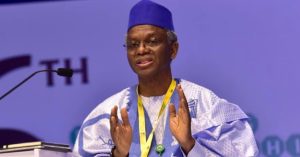

Far-reaching legal education reform proposals took centre stage at the 2026 Legal Education Summit organised by the Nigerian Bar Association (NBA), with participants advocating significant changes to the structure of legal training in Nigeria, including reducing the duration of university law programmes and re-examining the role of the Nigerian Law School.
The summit brought together key stakeholders in the legal profession to review the effectiveness of the country’s legal education framework and assess whether existing structures remain suitable for producing lawyers capable of meeting modern professional demands.
At the heart of the discussions was the role of the Council of Legal Education (CLE), the statutory body charged with regulating legal education and professional training for aspiring lawyers in Nigeria.
Established under the Legal Education (Consolidation, etc.) Act of 1976, which re-enacted the original 1962 legislation, the Council supervises the Nigerian Law School, accredits university law faculties and issues qualifying certificates required for admission to the Nigerian Bar.
The Council also oversees the one-year vocational training programme undertaken by graduates of accredited law faculties before they are called to the Bar. Operating under the supervision of the Attorney-General of the Federation, the Council currently runs seven Nigerian Law School campuses across the country’s geopolitical zones, with its headquarters located in Abuja. One of the most prominent voices at the summit was the President of the Nigerian Bar Association, Afam Osigwe, who questioned the necessity of maintaining a five-year law degree programme at Nigerian universities.
Osigwe argued that the quality of legal education is not determined by the length of time students spend in law faculties but by the relevance and practical value of the curriculum. According to him, ongoing legal education reform discussions should consider reducing the duration of the Bachelor of Laws programme from five years to three years while reviewing both university and Law School curricula.
He said proposed reforms should evaluate “the desirability of the present five-year length of study for the law degree, the course content of the university education, the course content and thrust of the Law School, the possibility of licensing private law schools or legal education practitioners, and the requisite qualifications for sitting for a Bar Finals examination.”
Osigwe maintained that practical and professionally focused training could be delivered effectively within a shorter timeframe. “The practical and focused content of university education will achieve better results even if it lasts for three years,” he said.
The NBA President also supported proposals that only core legal subjects should be compulsory for candidates seeking eligibility to sit for the Bar Finals examination. The subjects he identified include constitutional law, administrative law, criminal law, tort, contract, land law, equity and trusts, as well as the Nigerian legal system.
He further argued that shortening the duration of legal studies would reduce financial pressure on students and their families. Drawing comparisons with legal education systems in England, where most law degree programmes last three years, Osigwe noted that institutions such as the University of Buckingham already operate accelerated two-year law programmes.
According to him, reducing programme duration would ease the burden of tuition, accommodation, feeding, clothing and Nigerian Law School expenses, particularly as many graduates already struggle to meet the financial requirements associated with legal training. He also warned that the growing number of law graduates, coupled with the Law School’s admission limitations, may eventually compel policymakers to review the current structure.
The most controversial contribution to the summit came from the Vice-Chancellor of Imo State University, Uchefula Chukwumaeze. Citing what he described as prevailing realities within the legal education sector, Chukwumaeze argued that the Nigerian Law School had outlived its usefulness and should be scrapped entirely.
Under his proposal, the Council of Legal Education would retain responsibility for setting standards and requirements for admission to the Bar, while accredited university law faculties would take over the responsibility of training prospective lawyers. He argued that any meaningful legal education reform must begin with a fundamental examination of the existing structure and the institutions responsible for legal training.
His recommendation immediately generated debate among participants, highlighting the growing divide over how best to modernise legal education in Nigeria while maintaining professional standards. The discussions underscored increasing calls for legal education reform, as stakeholders seek solutions to challenges relating to curriculum relevance, professional training, student costs and the future role of the Nigerian Law School in the country’s legal system.