Over 11.5m Rural Nigerians benefit as RAAMP improves access through ongoing rural infrastructure projects across participating states, according to the Minister of State for Agriculture and Food Security, Senator Aliyu Abdullahi. He stated that over 11.5m Rural Nigerians benefit from improved road connectivity under the Rural Access and Agricultural Marketing Project (RAAMP).
The minister added that over 11.5m Rural Nigerians benefit as RAAMP improves access to markets, services, and agricultural corridors aimed at strengthening rural livelihoods.
The Rural Access and Agricultural Marketing Project (RAAMP) is a federal initiative supported by the World Bank and the French Development Agency (AFD). It is designed to improve rural road networks, enhance agricultural market access, and support economic development in rural communities across Nigeria.
The programme operates in multiple states and focuses on rehabilitating rural roads that connect farming communities to markets and processing centres. It also aims to reduce transportation barriers that affect agricultural productivity and rural trade.
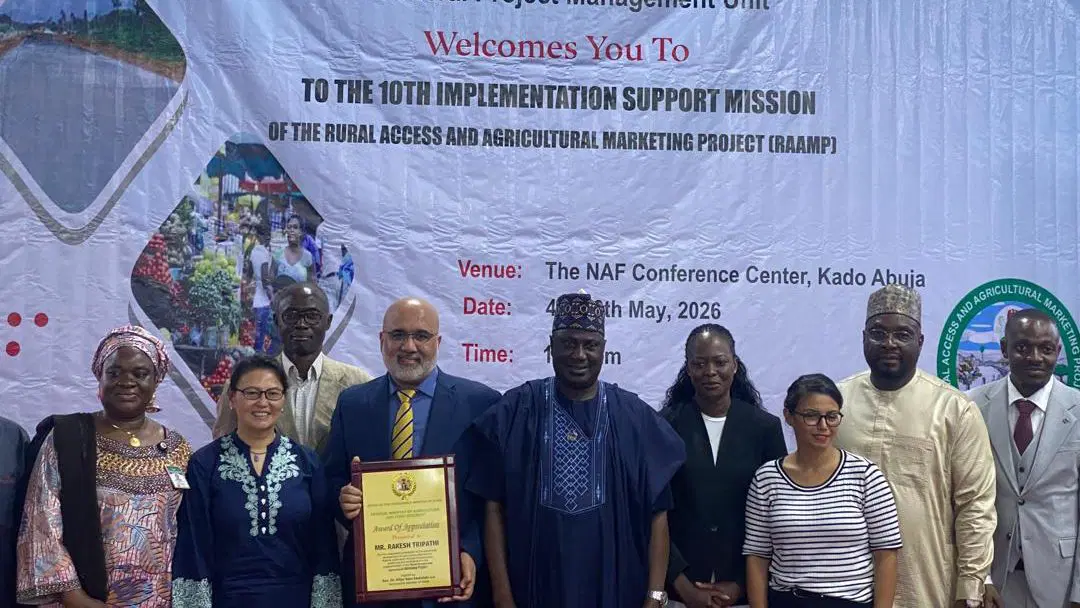
Speaking during the 10th joint World Bank and AFD RAAMP implementation support mission in Abuja, Senator Aliyu Abdullahi said the project has recorded significant progress in expanding rural infrastructure. He disclosed that about 1,500 kilometres of rural roads have been completed under the programme, with an additional 2,500 kilometres targeted for completion by December 2026.
According to him, over 11.5 million Rural Nigerians have directly benefited from improved access provided through RAAMP interventions across participating states. He explained that improved rural roads are critical to reducing post-harvest losses and enabling farmers to transport goods more efficiently to markets.
The minister also noted that participating states are at different stages of implementation, with ongoing coordination between federal and state institutions to ensure sustainability of rural infrastructure investments.
RAAMP additionally includes institutional reforms such as rural road management agencies and structured maintenance frameworks designed to support long-term infrastructure durability.
The reported benefit to Rural Nigerians highlights the role of infrastructure in agricultural productivity and rural economic inclusion. Improved road access is expected to reduce transportation costs, increase market participation, and strengthen value chains in agriculture.
Better connectivity also supports access to healthcare, education, and other essential services in rural communities. The programme aligns with national efforts to improve food security and rural development outcomes. Sustained implementation will determine the long-term impact of RAAMP in closing infrastructure gaps across rural Nigeria.