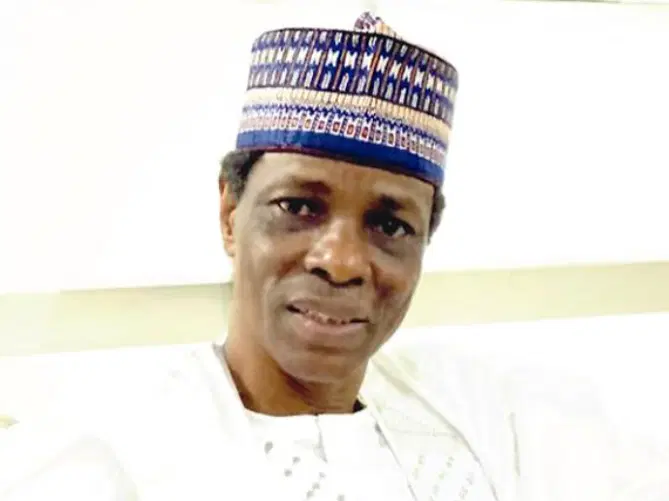
Former Sokoto State Deputy Governor and ex-Minister of Water Resources, Muktari Shagari, has renewed calls for the establishment of state police in Nigeria, arguing that the country’s worsening security challenges demand urgent reforms.
Speaking in an interview, Shagari said the creation of state police is no longer a matter of political debate but a practical necessity. He stressed that while decentralised policing could strengthen security operations, strong State Police Safeguards must be embedded in the legal framework to prevent abuse and ensure accountability.
According to Shagari, insecurity has continued to spread across different regions of Nigeria despite ongoing efforts by federal security agencies. He noted that crimes such as banditry, kidnapping, and violent attacks have stretched existing security institutions beyond their capacity, making it increasingly difficult for centralised policing structures to effectively respond to threats across the country.
The former deputy governor said state police would enable states to recruit personnel from local communities who possess a better understanding of the terrain, culture, and security realities of their areas. He maintained that lawmakers should prioritize legislation that strengthens security and protects citizens while ensuring professionalism and accountability within the proposed system.
One of the major concerns surrounding the proposal is the possibility that governors could use state police to target political opponents. Responding to such fears, Shagari argued that hypothetical concerns should not prevent reforms aimed at protecting lives and property.
He said any governor who deploys security personnel for political purposes would be acting outside constitutional provisions and democratic principles. According to him, carefully designed State Police Safeguards can be incorporated into the legislation to prevent misuse while allowing the institution to perform its core responsibility of protecting citizens.
Shagari acknowledged concerns about the financial capacity of many states to maintain their own police structures.
However, he insisted that security should remain the highest priority of government at all levels. He explained that states already allocate substantial resources to security-related activities and should be able to redirect existing funds toward supporting state policing operations.
The former minister proposed a collaborative funding model involving both federal and state governments. He suggested that allocations tied directly to the Federation Account could help guarantee salaries, operational expenses, and long-term sustainability.
On the challenge posed by heavily armed criminal groups, Shagari said state police would offer a significant advantage through local intelligence gathering.
He explained that officers recruited from the communities they serve are more likely to identify criminal collaborators and expose networks assisting kidnappers, bandits, and other violent groups. While emphasizing the need for state police, he also urged the Federal Government to intensify efforts against illegal arms trafficking and the networks supplying sophisticated weapons to criminal organisations.
Shagari identified recruitment standards, professional training, and accountability mechanisms as essential components of a successful state police system. He said officers must be educated and trained to understand that their primary duty is protecting citizens rather than intimidating them.
The proposed framework, he added, should contain clear disciplinary measures for misconduct and include public sensitisation programmes to improve cooperation between security personnel and communities. He noted that trust is more likely to develop when law enforcement officers are familiar with the communities they serve and residents view them as partners in maintaining peace.
While advocating for decentralised policing, Shagari cautioned against viewing state police as a complete solution to Nigeria’s security crisis.
He stressed that effective security requires collaboration among the military, conventional police, intelligence agencies, vigilante groups, and community-based security organisations. According to him, state police would strengthen this network by providing local knowledge and faster response capabilities while working alongside existing institutions.
Shagari urged members of the National Assembly to move beyond partisan considerations and focus on reforms capable of improving national security. He argued that Nigeria has reached a point where action is required, saying the conversation around state police must now translate into concrete legislation.
The former deputy governor concluded that State Police Safeguards are essential for success, but insisted that the country can no longer afford further delays in establishing a policing system capable of addressing growing security threats and protecting citizens more effectively.