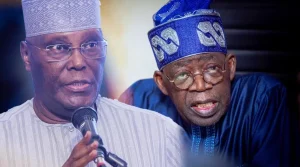
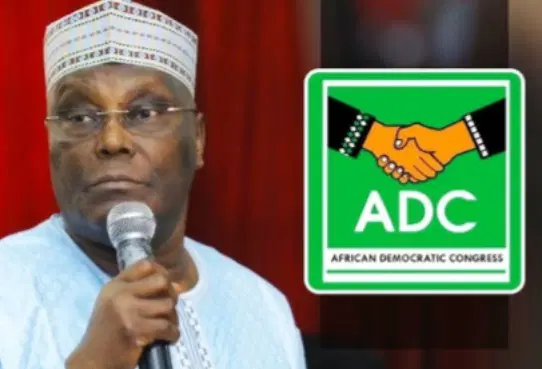
Former Vice-President Alhaji Atiku Abubakar has described the defection of his son, Abubakar “Abba” Abubakar, to the All Progressives Congress (APC) as a purely personal decision, saying such choices are normal in a democracy. Atiku made the remarks on Thursday in a statement issued via his verified social media account.
Abba, who previously belonged to the Peoples Democratic Party (PDP), formally joined the ruling APC at an event held at the National Assembly in Abuja on Thursday. He pledged support for President Bola Ahmed Tinubu’s bid for re-election in 2027 and urged his political network to back the APC’s agenda.
Reacting to his son’s move, Atiku said the choice was entirely personal and not alarming, noting that family members often make independent political decisions without interfering in one another’s conscience. He said personal and political choices can diverge even within the same family, which is a feature of democratic systems.
Atiku said: “The decision of my son, Abba Abubakar, to join the APC is entirely personal. In a democracy, such choices are neither unusual nor alarming, even when family and politics intersect. As a democrat, I do not coerce my own children in matters of conscience, and I certainly will not coerce Nigerians.”
While characterising the defection as a personal matter, Atiku took a critical tone toward the ruling party’s performance. He said his foremost concern remained the state of governance in Nigeria, pointing to what he described as poor governance and severe economic and social hardships under the APC administration.
Atiku added that he remains committed to working with “like-minded patriots” to restore good governance and offer Nigerians a credible alternative that will deliver relief, hope and progress for citizens. He said his focus continues to be on national issues rather than family political choices.
Political observers say the timing of Abba’s defection — coming as Atiku pursues his own political agenda — underlines the complexity of Nigeria’s political landscape ahead of the 2027 general elections. The move has drawn attention in political circles and media commentary, as analysts weigh the implications for party alignments and electoral strategies.
The development also sparked reactions from various political actors, including members of the ruling APC, who framed the defection as a symbol of broader support for their policies. However, Atiku’s response focused on democratic values and individual choice rather than political rivalry.
Atiku’s response underscores tensions and fluidity within Nigeria’s political class, highlighting how personal decisions can intersect with broader partisan narratives as the country prepares for future elections.