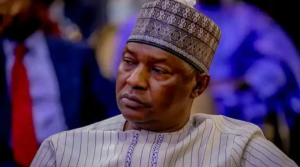
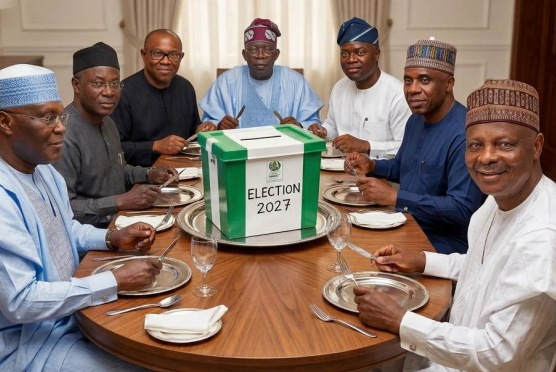
The opposition’s renewed gathering in Abuja comes with one question hanging over the political class: can Nigeria’s opposition leaders put collective ambition above personal ambition ahead of the 2027 presidential election?
The meeting follows the Ibadan Declaration of April 2026, which presented a framework for greater cooperation among opposition forces seeking an alternative to the President Bola Tinubu-led All Progressives Congress, APC.
But translating declarations into an effective political alliance remains a different challenge.
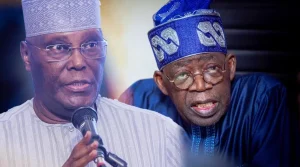
The opposition has several prominent figures seeking relevance ahead of 2027, including former Vice-President Atiku Abubakar, Peter Obi, Rabiu Musa Kwankwaso and Oyo State Governor Seyi Makinde.
Each commands political networks, loyal supporters and significant influence. The difficulty is determining who, if anyone, is prepared to step aside for a common candidate.
Nigeria’s political history suggests that incumbents are rarely defeated simply because opposition parties decide to cooperate.
The 2015 presidential election remains one of the clearest examples.
After 16 years in power, the Peoples Democratic Party, PDP, lost the presidency to the APC. The victory followed opposition consolidation, but also internal divisions within the ruling party and growing public dissatisfaction with the government.
A similar lesson emerged from Kenya’s 2002 election, when an opposition coalition defeated the Kenya African National Union after decades in power.
In both cases, opposition unity mattered, but it operated alongside other factors, including divisions within the ruling establishment and dissatisfaction among voters.
That presents a significant lesson for Nigeria’s opposition ahead of 2027.
A coalition may create a stronger platform, but it cannot manufacture public support where voters are unconvinced.
The emerging opposition landscape is increasingly crowded.
Atiku Abubakar is now carrying the ADC presidential ticket, with former Rivers State Governor Rotimi Amaechi as his running mate.
Peter Obi and Rabiu Kwankwaso are also associated with an emerging political arrangement under the Nigeria Democratic Congress, NDC, while Makinde has emerged as another influential figure in the opposition conversation.
The challenge is therefore not a shortage of presidential hopefuls.
It is the willingness to sacrifice individual ambitions for a broader strategy.
A successful coalition requires someone to accept that another candidate may have a better chance of winning.
That is precisely where previous attempts at opposition consolidation have struggled.
Whoever eventually emerges from the opposition camp will face a ruling party with considerable institutional advantages.
Tinubu controls the presidency, while the APC maintains a substantial political structure across the country.
The party also has access to the advantages that come with incumbency and an established national organisation.
The opposition, meanwhile, continues to express concerns about the credibility of electoral institutions and the conduct of elections.
INEC remains a particularly sensitive issue, with public confidence in electoral outcomes still a major concern.
These realities make opposition coordination more important, but they also make internal discipline essential.
A divided opposition could spend more energy fighting itself than challenging the ruling party.
The G100 summit in Abuja is not expected to produce an immediate presidential consensus.
Instead, the gathering is designed to establish a framework through which competing interests can be discussed and negotiated.
That may appear modest, but it could become important if the opposition genuinely intends to build a common platform.
The central question remains difficult:
Who is willing to step down for whom?
Peter Obi’s supporters consider him one of the strongest opposition candidates.
Atiku’s camp can make a similar argument for the former vice-president.
Kwankwaso has his own political base, particularly in the North, while other political actors bring additional regional and organisational strengths.
A coalition cannot succeed if every leader believes he must personally occupy the top position.
Regional considerations could make the negotiations even more complicated.
Nigeria’s presidential politics has historically been influenced by expectations surrounding North-South power rotation.
The PDP’s internal arrangement in the early 2000s reinforced expectations that presidential power would alternate between the regions.
The death of President Umaru Musa Yar’Adua and the subsequent emergence of Goodluck Jonathan altered that political sequence.
Jonathan’s decision to contest and win the 2011 election generated resentment in sections of the North, where some political actors believed the region had been denied its expected turn.
Muhammadu Buhari subsequently served eight years before Tinubu, a southerner, emerged in 2023.
Tinubu is now seeking another term.
This creates another complication for the opposition.
While some southern interests may argue that the region should retain the presidency for another four years, any opposition candidate also needs substantial northern support to win nationally.
A serious coalition therefore cannot ignore either region.
The deepest problem facing the opposition may ultimately be psychological rather than organisational.
Political leaders frequently describe their ambitions as national service.
But national service sometimes requires an individual to accept a position that is less than the one he originally sought.
That is the principle behind the African philosophy of Ubuntu: the collective can sometimes demand sacrifice from the individual.
For the opposition, that principle could become decisive.
If Atiku, Obi, Kwankwaso, Makinde and other influential actors remain committed to their individual ambitions above all else, another coalition arrangement could collapse despite carefully worded communiqués.
But if they can agree on a credible candidate, a shared programme and a transparent method of choosing that candidate, the political equation could change considerably.
The opposition therefore faces two elections before 2027.
The first is the internal contest for leadership, strategy and influence.
The second is the actual presidential election.
The first could determine the outcome of the second.
Tinubu remains a formidable political opponent, and APC supporters are already projecting confidence about his chances in 2027.
But opposition leaders do not necessarily need to prove today that they can defeat Tinubu.
They first need to prove that they can overcome their own divisions.
The Abuja gathering provides another opportunity to do that.
Whether it becomes another meeting that produces ambitious declarations or the beginning of a genuine political realignment will depend on one thing: who is willing to sacrifice personal ambition for collective victory.
The Ibadan Declaration opened the conversation.
What the opposition does next will determine whether that declaration becomes the foundation of a serious challenge in 2027—or another political document remembered only after the election.