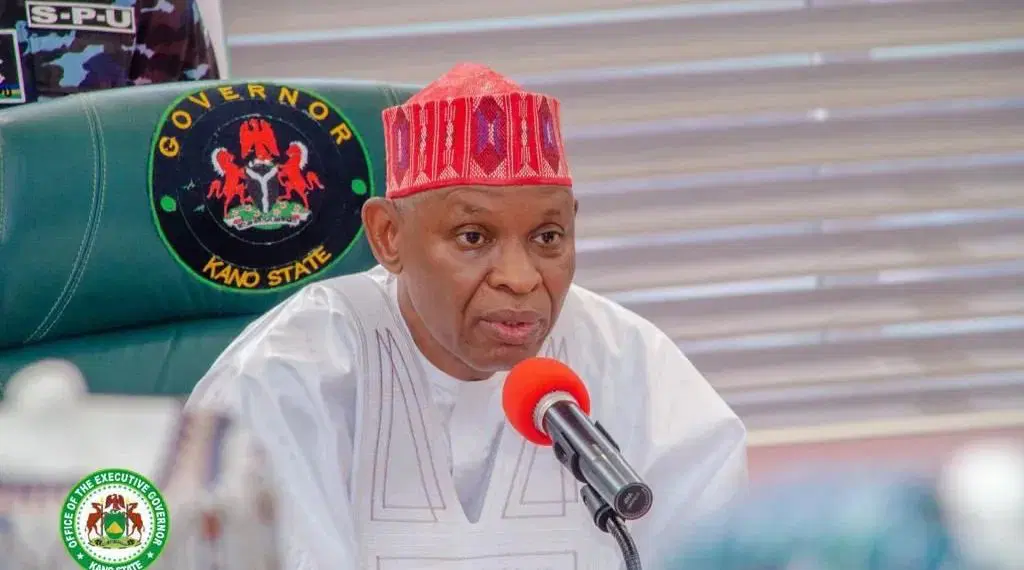
The Garo selection for the position of deputy governor has been defended by Kano State Governor Abba Kabir Yusuf, who outlined the reasons behind nominating Aminu Abdussalam Garo following the vacancy in the office.
The office of the deputy governor in Kano State became vacant after recent political developments, prompting the need for a replacement in line with constitutional provisions.
Under Nigeria’s Constitution, a governor is required to nominate a deputy governor, subject to confirmation by the State House of Assembly. The process typically involves consultations within the ruling party and engagement with key political stakeholders to ensure alignment and stability in governance.
The development has attracted public attention within Kano State’s political landscape, where leadership changes often reflect broader party dynamics.
Governor Yusuf, while addressing stakeholders, stated that the Garo selection was based on merit, experience, and political considerations within the state.
He explained that Aminu Abdussalam Garo was chosen after consultations with party leaders and other stakeholders, emphasising that the nominee has the capacity to support the administration’s governance objectives.
The governor also rejected claims of imposition, maintaining that due process was followed in arriving at the decision. He confirmed that the nomination had been forwarded to the Kano State House of Assembly for confirmation in accordance with constitutional procedures.
Garo, who has previously held public office, was described as having administrative experience and grassroots political engagement. The nomination is expected to undergo legislative scrutiny before final approval.
The Garo selection has generated reactions among political observers, with attention focused on how the appointment may influence governance and party alignment in the state. Governor Yusuf further called for cooperation among political stakeholders to ensure continuity in governance following the leadership transition.
The Garo selection underscores the importance of executive discretion in appointing a deputy governor, balanced by legislative oversight through the confirmation process.
The development also reflects internal party dynamics, where consensus-building and stakeholder engagement play a role in leadership decisions. If confirmed, the deputy governor nominee is expected to contribute to policy implementation and administrative coordination within the state government.