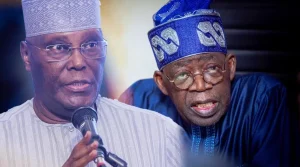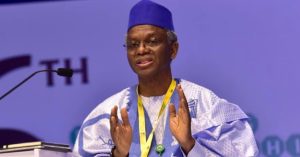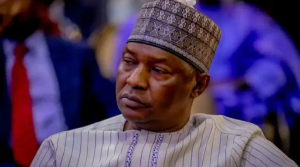
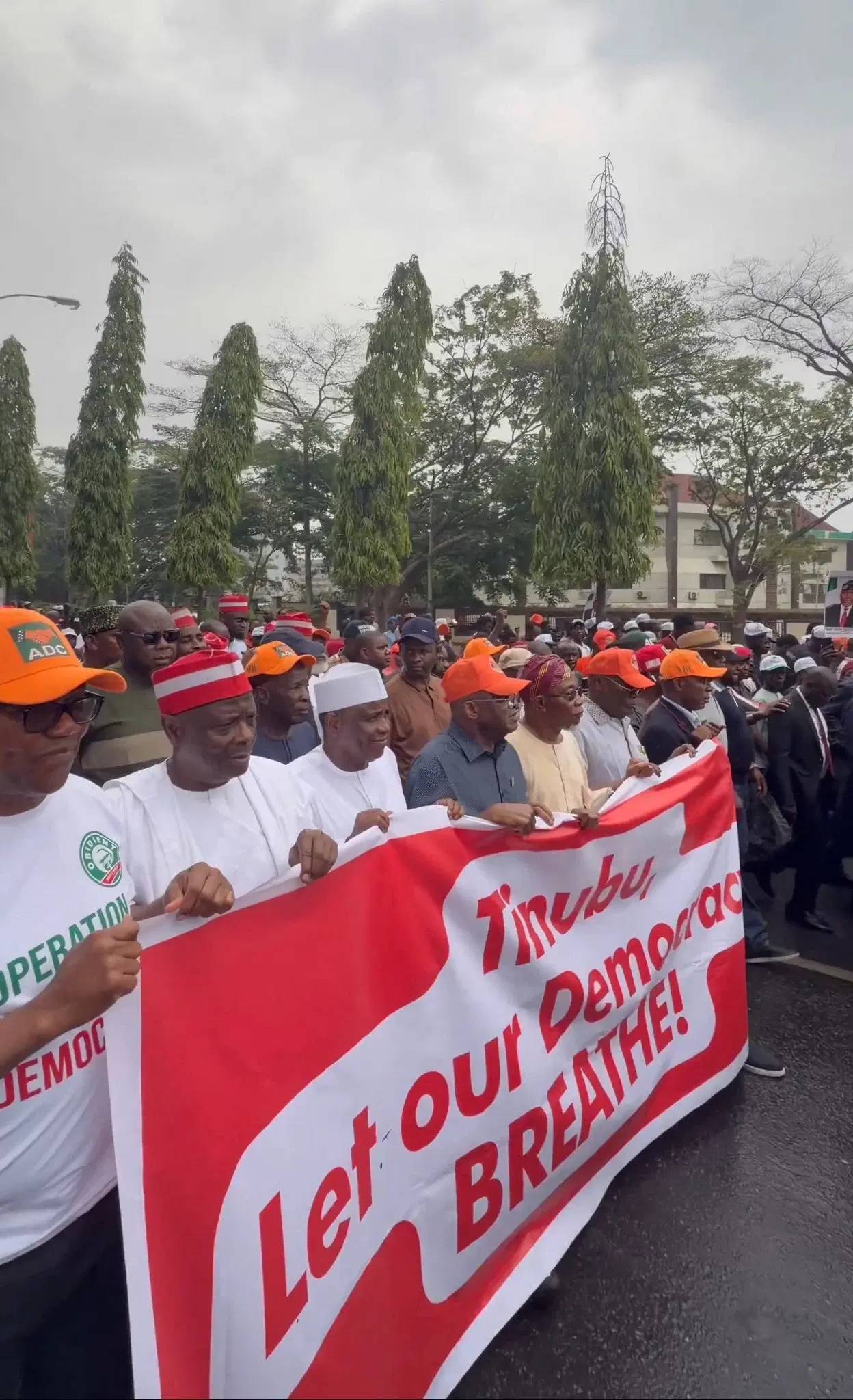
INEC protest unfolded in Abuja as prominent opposition leaders, including Atiku Abubakar, Peter Obi, Rabiu Kwankwaso, and Rauf Aregbesola, converged on the headquarters of the Independent National Electoral Commission to express concerns over recent decisions affecting the African Democratic Congress.
The INEC protest comes amid heightened tensions surrounding decisions by the electoral commission regarding the leadership structure of the African Democratic Congress (ADC).
INEC had updated its records to reflect a leadership arrangement in line with a court directive to maintain the status quo pending determination of an ongoing dispute.
This action has drawn reactions from opposition figures who interpret the move as affecting party autonomy.
The ADC has recently attracted several political actors ahead of the 2027 general elections, making its leadership structure a matter of national relevance.
During the INEC protest, opposition leaders gathered at the commission’s headquarters in Abuja to demand a review of its actions and clarification on the legal basis for the changes made to party leadership records.
The protest followed a series of engagements among ADC stakeholders and allied political figures who expressed concern over the implications of the commission’s decisions.
Participants in the protest called for adherence to established procedures and respect for internal party mechanisms in determining leadership structures.
Speaking in relation to the INEC protest, opposition leaders raised concerns about the potential impact of the development on electoral participation and fairness.
They stated that decisions affecting party leadership could influence preparations for upcoming elections, including governorship contests and future national polls.
The leaders also emphasised the importance of maintaining public confidence in electoral institutions and ensuring that all political parties operate within a transparent and predictable framework.
INEC has maintained that its actions were guided by a court order directing parties to maintain the status quo in the leadership dispute within the ADC.
According to the commission, updating its records was a procedural step in compliance with legal directives and does not constitute interference in party affairs.
The interpretation of the court order remains central to the disagreement, with stakeholders offering differing views on its application.
The INEC protest highlights broader concerns about electoral governance, institutional independence, and the relationship between political parties and regulatory bodies.
Observers note that unresolved disputes over party leadership could affect candidate nomination processes and overall election preparedness.
The development also reflects ongoing political alignments and strategic positioning ahead of the 2027 general elections.
The INEC protest underscores the intensity of political engagement among key actors as the next election cycle approaches.
It also points to the importance of clear legal frameworks and transparent institutional actions in managing political disputes.
The situation reinforces the need for collaboration between electoral bodies and political stakeholders to ensure stability in the democratic process.