Nigeria currently has about 3,725,593 internally displaced persons (IDPs) living in approximately 3,900 camps and settlements across the country, according to data compiled from humanitarian and government sources.
The figures highlight the scale of displacement caused by prolonged insecurity in several regions of the country.
The data, obtained from the International Organisation for Migration (IOM) Displacement Tracking Matrix, the National Bureau of Statistics (NBS) and other humanitarian agencies, indicates that the numbers represent estimates as displacement patterns continue to change due to ongoing security challenges.
Nigeria has experienced years of insecurity driven by multiple conflict dynamics. These include the Boko Haram insurgency in the North-East, banditry in the North-West, farmer–herder conflicts in the North-Central, and communal clashes in parts of southern Nigeria.
These crises have forced millions of residents to abandon their homes and livelihoods.
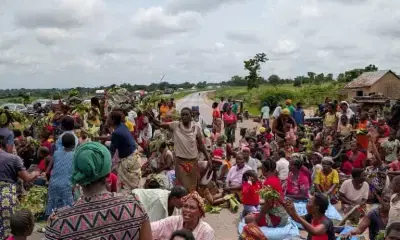
Humanitarian organisations report that displaced persons often relocate to camps, host communities, or temporary settlements established by state governments, federal agencies and international relief organisations.
The camps provide basic shelter and limited access to food, healthcare and other essential services.
Analysis of available data shows that Nigeria’s displaced population is larger than the total population of several countries worldwide.
According to United Nations population estimates, countries such as Uruguay (3.4 million), Jamaica (2.8 million), Qatar (2.7 million), Namibia (2.6 million) and Botswana (2.6 million) have smaller populations than the number of internally displaced persons in Nigeria.
In many northern states affected by insurgency and banditry, IDP camps have become a permanent feature in state capitals and rural communities.
Families displaced by repeated attacks often remain in camps for extended periods after losing homes, farms and other sources of livelihood.
Borno State, which has been the epicentre of the Boko Haram insurgency, previously hosted many of the country’s IDP camps.
Authorities in the state have in recent years shut down several camps and initiated resettlement programmes aimed at returning displaced residents to their communities.
The scale of internal displacement underscores the humanitarian and security challenges facing Nigeria.
Displacement affects food production, economic activities and access to education and healthcare in affected communities.
Government agencies, international organisations and humanitarian partners continue to provide relief support to displaced populations while security operations continue in conflict-affected regions.