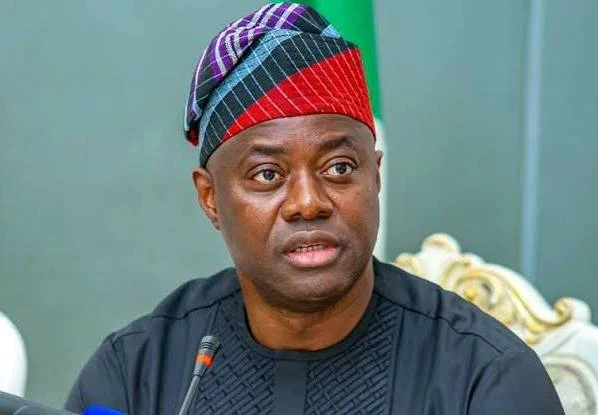
Nigeria one-party state concerns have been raised by Oyo State Governor Seyi Makinde, who warned that recent political developments indicate the country may be drifting towards a system dominated by a single party, with implications for democratic balance.
The warning that Nigeria one-party state is emerging was contained in a newsletter issued by the governor titled “The business of governance.”
Makinde pointed to ongoing developments within major political parties, including the Peoples Democratic Party and the African Democratic Congress, as well as positions taken by electoral and judicial institutions.
He stated that these developments raise broader concerns beyond partisan politics and affect the future of democracy in Nigeria.
The governor’s remarks come amid increasing political realignments and coalition efforts ahead of the 2027 general elections, with shifting alliances across party lines.
Expressing his position, Makinde said the trend towards a Nigeria one-party state should not be ignored, noting that opposition voices are increasingly under pressure.
He stated that individuals who speak against the situation are being threatened, while opposition groups are becoming fragmented and pushed to the margins.
According to him, this has led to a situation where some citizens are withdrawing from political engagement because they believe their voices no longer matter.
Makinde emphasised that a functional democracy depends on the presence of credible alternatives, strong institutions, and public confidence in the political process.
The concern that Nigeria one-party state may be taking shape highlights potential implications for accountability and governance.
Makinde noted that when opposition becomes ineffective, it weakens the ability to hold government accountable, which can affect how national challenges are addressed.
He stressed that democracy is built on plurality and the existence of diverse voices, including dissenting opinions, which help ensure transparency and responsiveness in governance.
The governor warned that silence, indifference, or withdrawal from civic engagement could lead to outcomes that may be difficult to reverse.
Addressing citizens and stakeholders, Makinde said the issue of a Nigeria one-party state is not a call for panic but a call for awareness and participation.
He urged both leaders and citizens to remain engaged in protecting democratic space and ensuring that institutions remain inclusive and accountable.
The governor also indicated plans to engage with various stakeholders across sectors to discuss ways of strengthening democratic processes and ensuring sustainable governance.
The warning about a Nigeria one-party state reflects broader concerns about political competition, institutional independence, and the balance of power within the country.
As Nigeria approaches another electoral cycle, the strength of opposition parties, the role of electoral institutions, and the level of public participation are expected to shape the political landscape.
Observers note that maintaining a competitive multi-party system remains central to democratic stability.