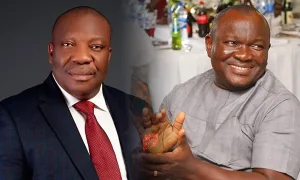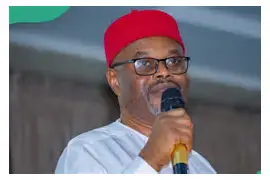
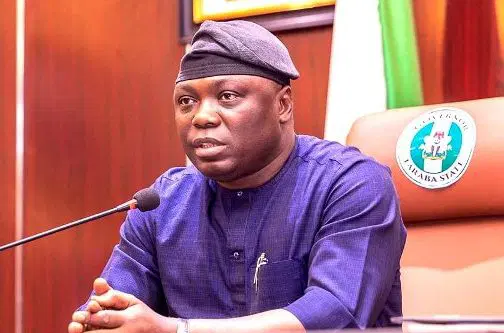
The Taraba State Government has rejected claims that the administration of Governor Agbu Kefas borrowed N1.2 trillion within three years, describing the figure as inaccurate and misleading. The Commissioner for Finance, Dr Sarah Adi, made the clarification on Sunday in Jalingo while addressing journalists on the state’s financial position. Adi said available data from the Debt Management Office, DMO, showed that Taraba’s domestic debt stood at N85.51 billion as of December 31, 2025.
According to the commissioner, the figure represented a reduction of about N2.45 billion from the N87.96 billion domestic debt recorded in DMO data covering the period before Kefas assumed office. She explained that a DMO publication released in March 2023 reflected Taraba’s debt position as of September 30, 2022, rather than the state’s position at the time of publication.
On external obligations, Adi said Taraba’s debt increased from approximately $46.47 million as of December 31, 2022, to about $48 million by December 31, 2025. She described the increase as relatively modest but acknowledged that fluctuations in the exchange rate could affect the naira value of the state’s foreign-denominated obligations.
The commissioner also addressed the N206.78 billion commercial bank financing facility approved by the Taraba State House of Assembly in 2023. She said the facilities involving Zenith Bank, United Bank for Africa, Fidelity Bank and Keystone Bank were backed by designated revenue streams.
Adi cautioned against treating the total approved value of a credit facility as equivalent to the state’s current outstanding debt. According to her, the actual liability would depend on the amount eventually disbursed, repayments made, any restructuring and the current balances on the respective facilities.
“The true outstanding balance can only be established by examining the amount actually disbursed, repayments made, any restructuring undertaken and the current balances on the respective facilities,” she said.
Adi also disputed claims that Taraba had already received N350 billion through a proposed capital-market financing programme. She explained that the programme remained subject to regulatory, statutory, market and disclosure requirements and was designed to raise funds in stages.
According to her, an initial tranche of about N35 billion was under consideration. She therefore argued that the N350 billion programme size should not be interpreted as money already received by the state or as an existing drawn liability.
The commissioner further clarified three financing agreements worth about $268 million signed with the ECOWAS Bank for Investment and Development, EBID, on June 26, 2026. She said the facilities were intended to support three major projects: an integrated industrial park, irrigated rice production and processing, and a 50-megawatt solar power project.
Adi stressed that signing the agreements did not mean the funds had immediately been released to the state. She said the facilities remained subject to conditions precedent, regulatory procedures and statutory approvals before any drawdown could occur.
According to the commissioner, four separate categories should be considered when assessing Taraba’s financial position. They include existing debt stock, approved financing facilities, actual outstanding balances, and proposed or undisbursed financing.
Adi warned that simply adding figures from these different categories together could create an inaccurate picture of the state’s actual debt burden. She maintained that approved facilities and proposed financing should not automatically be treated as money already borrowed or liabilities that are currently outstanding.
The commissioner said the Kefas administration’s borrowing decisions were guided by development priorities, repayment capacity, transparency and accountability. She maintained that the government was open to scrutiny of its finances but urged those assessing the state’s debt position to rely on verified financial records.
The clarification comes amid public debate over Taraba’s borrowing and financing activities, particularly the distinction between existing debt, approved credit facilities and proposed development financing. The state government’s position is that those figures must be assessed separately before conclusions are drawn about the actual size of Taraba’s debt burden.