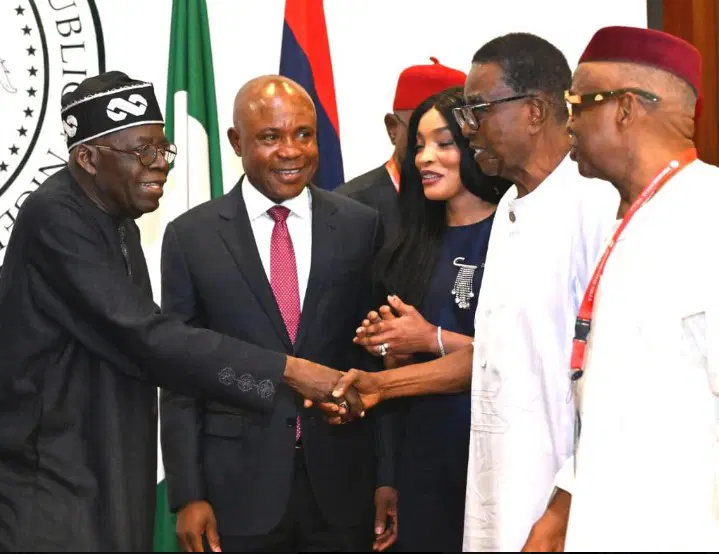
President Bola Tinubu has declared that democracy will survive in Nigeria despite what he described as persistent efforts by opposition actors to undermine its values, making the remarks while addressing a high-level delegation from Enugu State at the State House in Abuja, where he reaffirmed confidence in the country’s democratic system and governance direction.
Nigeria’s democratic system, restored in 1999 after prolonged military rule, has continued to evolve through multiple electoral cycles and political transitions. Over the years, debates have persisted around institutional strength, opposition politics, governance reforms, and the sustainability of democratic values in the face of economic and political pressures.
Recent political discourse has increasingly focused on the role of opposition parties, internal party democracy, and the conduct of political actors within the broader democratic framework. These discussions often intersect with national concerns about governance performance, economic reforms, and institutional accountability.
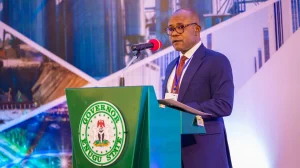
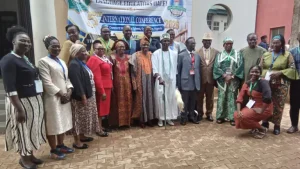
Speaking during the visit by the Enugu State delegation led by Governor Peter Mbah, President Tinubu said Nigeria’s democratic system remains stable and resilient despite criticisms. He stated: “Democracy will survive despite all intimidation. Ignore the naysayers. Stay focused. When you succeed, and they are angry, let them be.”
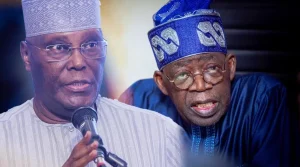
He further argued that some opposition figures publicly claim to support democracy while acting in ways that contradict its principles. According to him, “they don’t even believe in the democracy that they preach all about.”
Tinubu maintained that his administration is focused on governance priorities, particularly economic reforms and infrastructure development, which he said are aimed at long-term national stability. He emphasised that progress requires cooperation across federal, state, and local levels, describing governance as a collective responsibility.
The President also reiterated confidence in Nigeria’s economic outlook, stating that the country remains a leading force in Africa’s growth indicators, with ongoing reforms expected to strengthen its position.
During the engagement, he commended Governor Mbah’s efforts in Enugu State, particularly in infrastructure, healthcare, education, and security improvements, noting that subnational contributions remain critical to national development. Tinubu also reaffirmed his administration’s commitment to strengthening democratic institutions, stating that electoral processes, governance structures, and constitutional principles remain central to national stability.
The assertion that democracy will survive reflects ongoing efforts by the federal government to project institutional resilience amid political criticism and opposition concerns. It also underscores the continuing tension between governing authorities and opposition actors over democratic practices, policy direction, and institutional trust.
The remarks further highlight the importance of maintaining democratic engagement across political parties, reinforcing electoral participation, and ensuring that governance outcomes remain subject to institutional checks and balances.